Exhibitions / Exhibition 06
Food
Everybody has eaten. Few have drawn it. This exhibition collects food as it is remembered rather than served - the outline of a meal, the shape of a snack - and finds out which parts of dinner people actually retain.
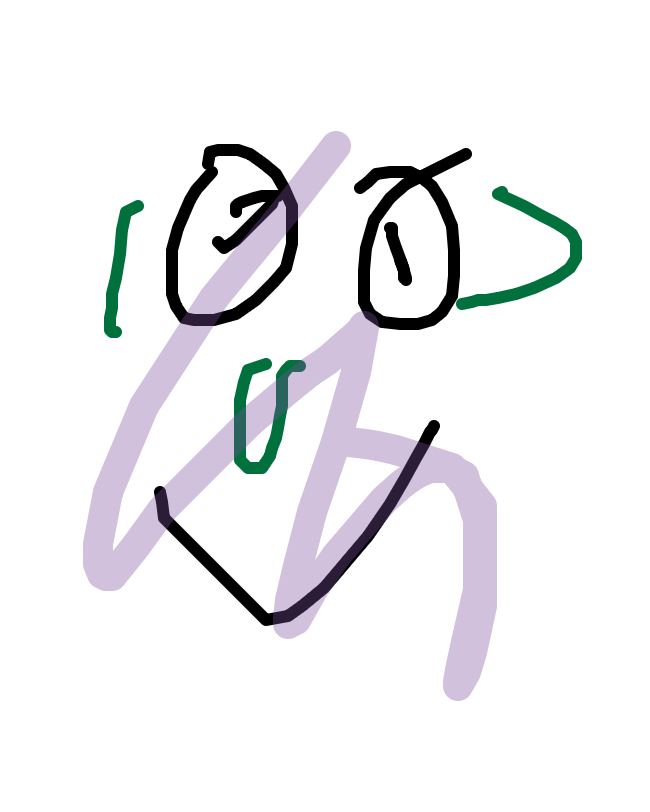
Two Heads, One Bracket
Amara Diallo
Three black outlines anchor the composition - two rounded cranial forms along the upper register, a bracketing green vertical at the left margin, and a green cup-shape at the right. The left head carries interior detail: a looped inner mark pressed with more urgency than the outer wall. The right head is emptier, its single interior stroke restrained. Below both, a green double-curve and a dark angular chevron pull the eye downward, where the heaviest black lines splay outward like splayed limbs. Threading through all of this, the lavender strokes were almost certainly laid down separately, their soft broad weight sitting beneath the harder marks, giving the page an underlayer that the precise black lines cut through rather than rest upon.
- Curatorial note, wifärt gallery
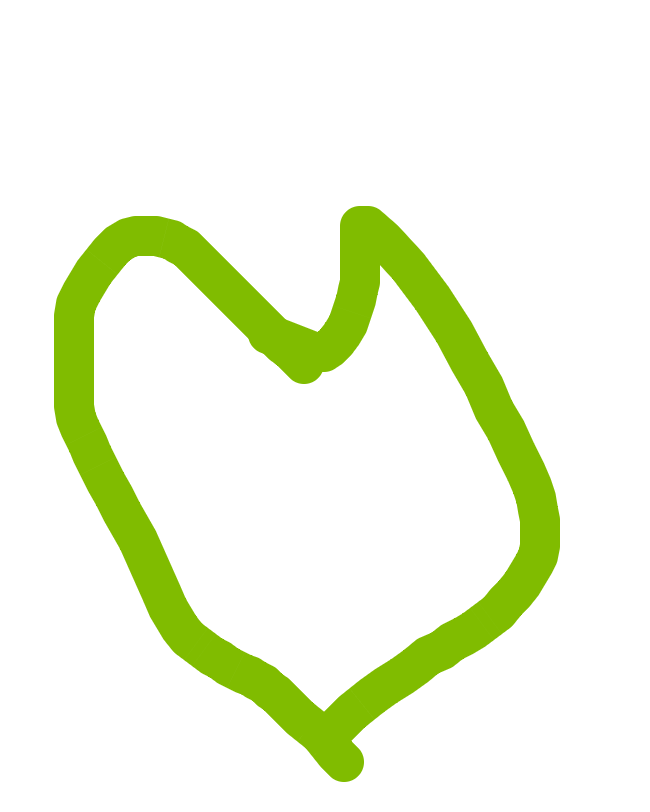
Cat Shape, Open Top
Chinwe Ofor
The lime green line enters at the upper left with considerable weight - thick, pressed, committed - before sweeping downward and around in a wide enclosure that accounts for the whole lower body of the form. What arrests attention is the upper portion: two humped rises separated by a narrow valley, the hand dipping inward and recovering twice, producing an outline that reads simultaneously as ears and as the notched crown of something almost heraldic. The interior remains entirely white, untouched, so that all meaning accumulates at the boundary alone.
- Curatorial note, wifärt gallery
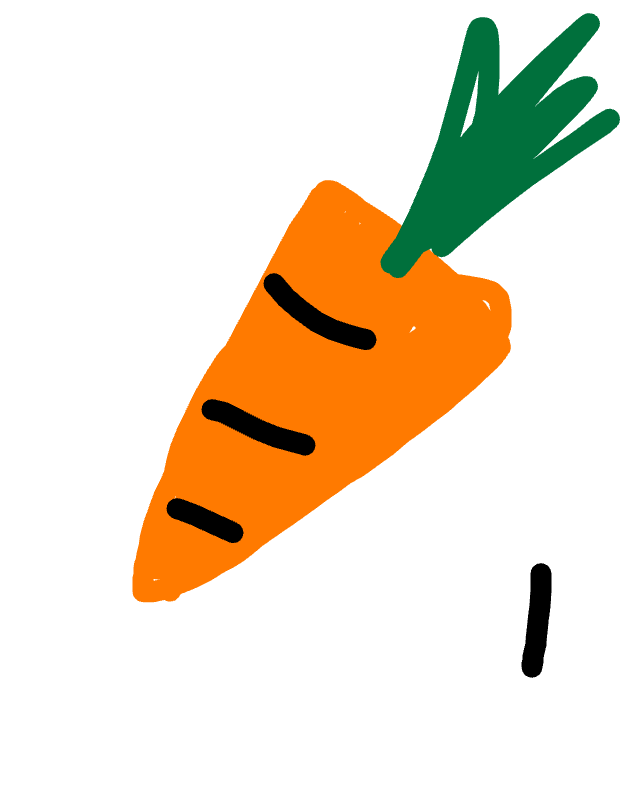
One Carrot, One Stroke
Isa
The orange body dominates - a wide triangular wedge pressed onto the page at a diagonal, its colour applied with enough coverage to feel substantial rather than provisional. Three parallel dark strokes cross its surface at intervals, each one short and slightly curved, their weight consistent enough to suggest a single unhesitating sequence. Above and to the right, the green foliage opens in loose finger-like forms, the hand clearly lifting and returning several times to build a shape that broadens as it rises. Separate from all of this, isolated near the lower right edge, sits a single vertical black stroke - modest in length, quiet in weight, belonging to nothing around it, and making that solitude felt.
- Curatorial note, wifärt gallery
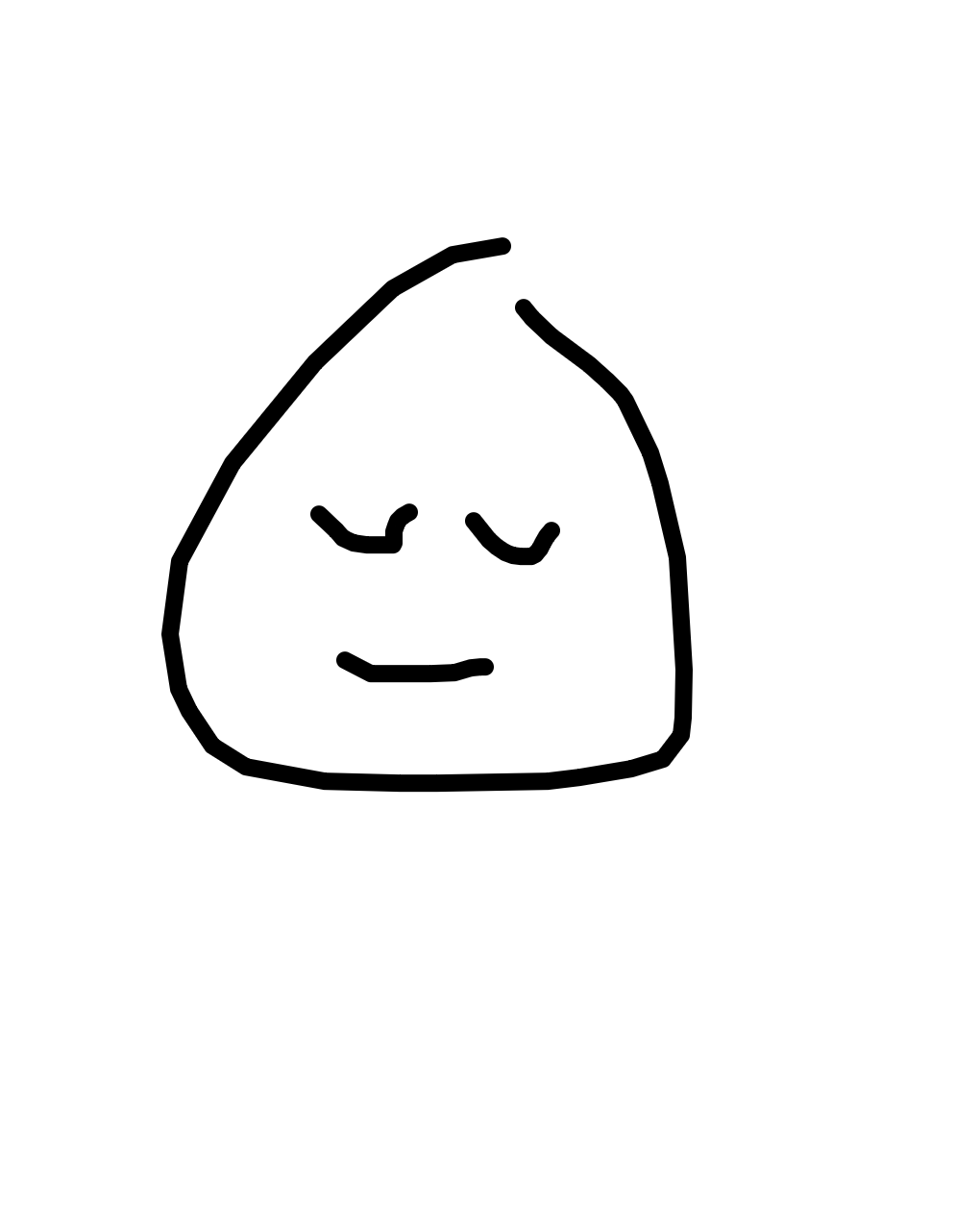
Closed Eyes, Mild Contempt
Umz
Somewhere between Kawanabe Kyōsai's yokai portraiture - where the simplified face becomes a container for uncanny interiority - and Philip Guston's late figuration, in which blunt rounded forms insist on personhood without flattering it, Umz's drawing positions itself with quiet certainty. The rounded triangular body is the first commitment; the half-lidded eyes and flat horizontal mouth arrive as conclusions, not decorations.
- Curatorial note, wifärt gallery
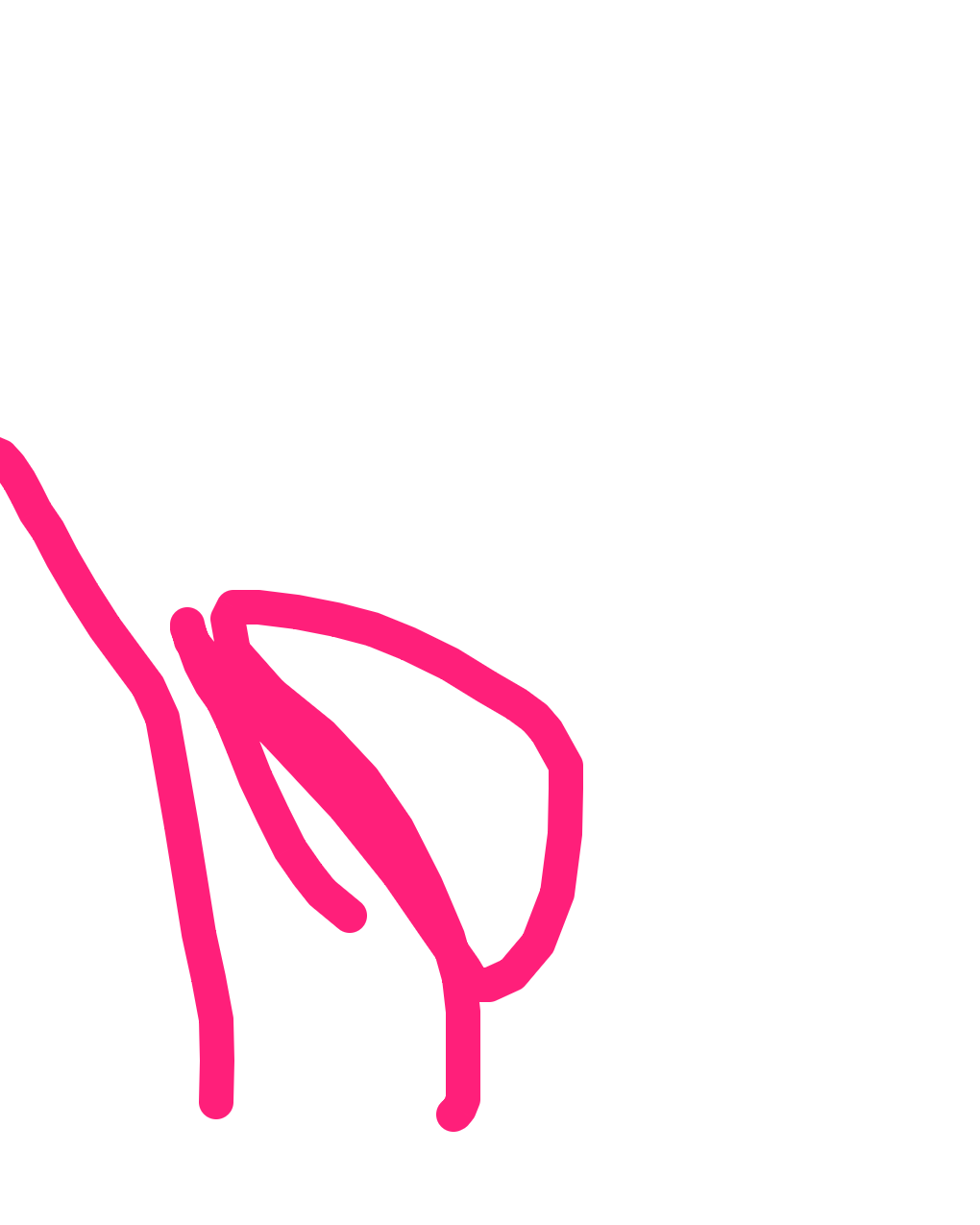
Looped Form With Descent
Grace Adeyemi
A diagonal stroke enters from the upper left, its hot-pink weight tracing a confident path downward before the hand commits to the second, more elaborate decision: a closed petal-like form built from two or three overlapping arcs, their inner lines splitting and fanning toward the base. The vertical on the left anchors the composition; the looped mass to its right is the work's argumentative centre, its interior strokes suggesting a pressure applied in sequence rather than simultaneously. Both elements terminate at the lower field without resolution, their descents simply stopping.
- Curatorial note, wifärt gallery
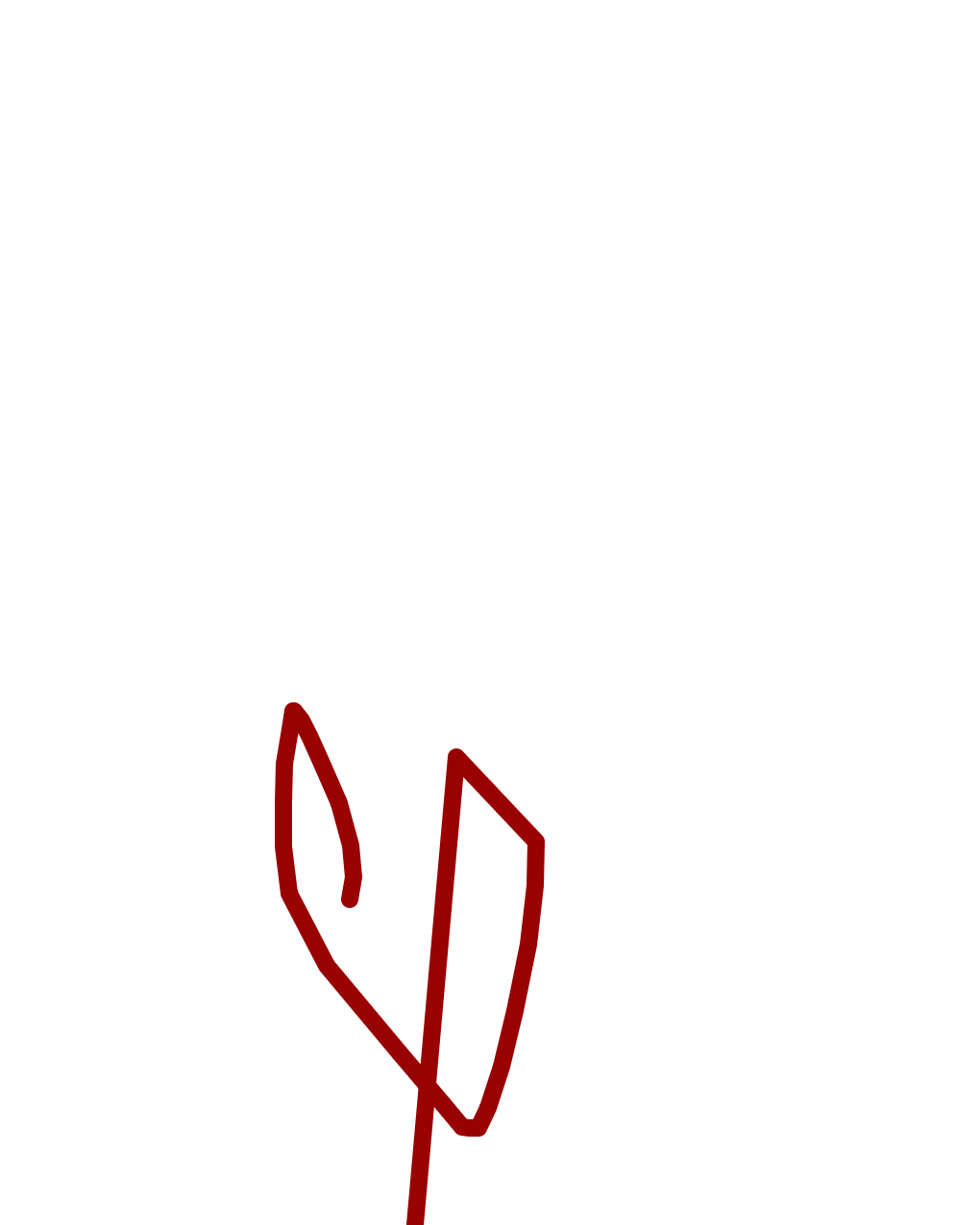
Two Leaves, One Stem
D. Achebe
The stem arrives first - a single dark red vertical descending from roughly mid-field toward the lower boundary, pressed with enough weight to read as the work's primary decision. From its upper portion two divergent forms open outward: to the left, a slender pointed leaf whose interior carries a second, shorter stroke that does not complete its intended vein but simply stops, mid-air; to the right, a broader parallelogram-like shape, its top edge angled, its sides suggesting deliberate containment. The asymmetry between these two elements - one loose and almost involuntary, the other comparatively architectural - is not resolved anywhere in the image. The surrounding white holds both without pressure.
- Curatorial note, wifärt gallery
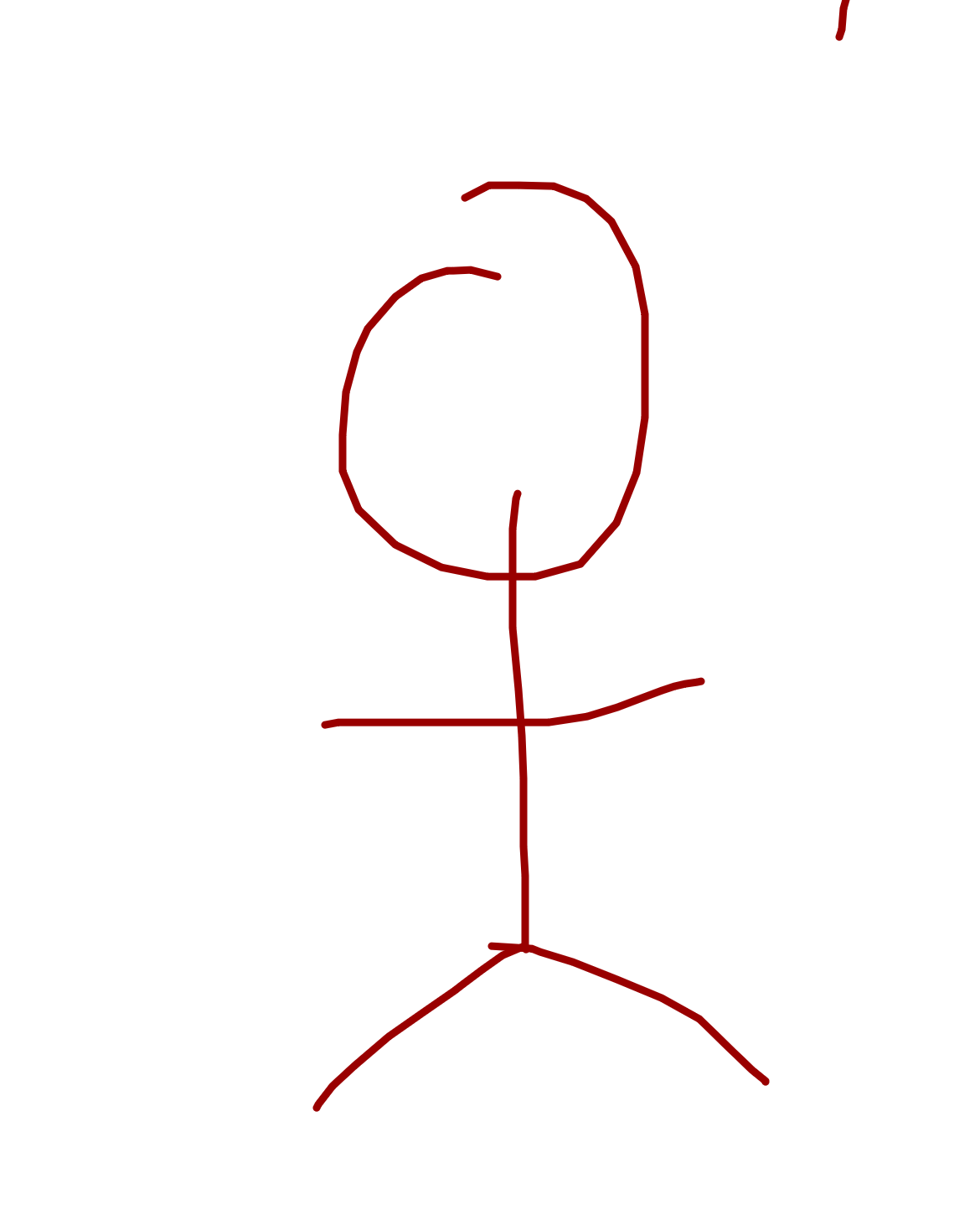
Standing Figure, Arms Out
Rita Mensah
The head is drawn as a closed oval, almost certainly first - the hand completing the round before committing to anything below. From its base a short neck descends, then a vertical spine continues downward with steady pressure, the dark red line thickening slightly at the crossbar where two arm strokes intersect it. That crossing point sits at roughly mid-field, governing the whole sheet's weight. The legs splay outward and downward in two confident arcs, wider at their lower termini than the arms above, grounding the figure with more lateral spread than the shoulders suggest. A faint interior curve within the head reads as an aborted or decorative second loop - the only mark that seems genuinely hesitant.
- Curatorial note, wifärt gallery
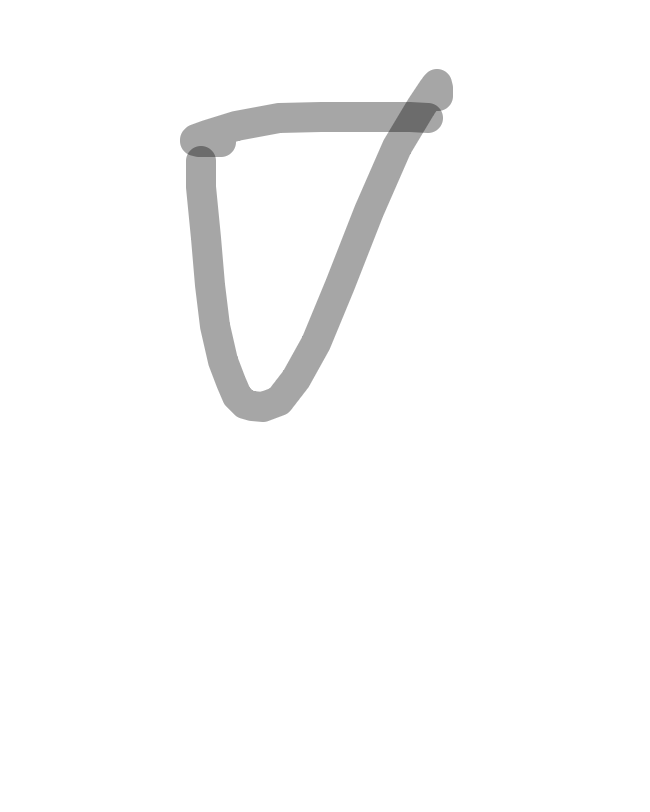
Loop Closed Against Itself
Destiny
Derrida's parergon - the frame that is neither wholly inside nor outside the work it bounds - acquires unusual visibility in Destiny's drawing, where a horizontal bar runs across the upper field and a looping descent curves back upward to meet it, sealing the interior off from the surrounding white. The grey line does not illustrate enclosure; it performs it, the closure happening at the exact moment the returning stroke touches its own origin.
- Curatorial note, wifärt gallery
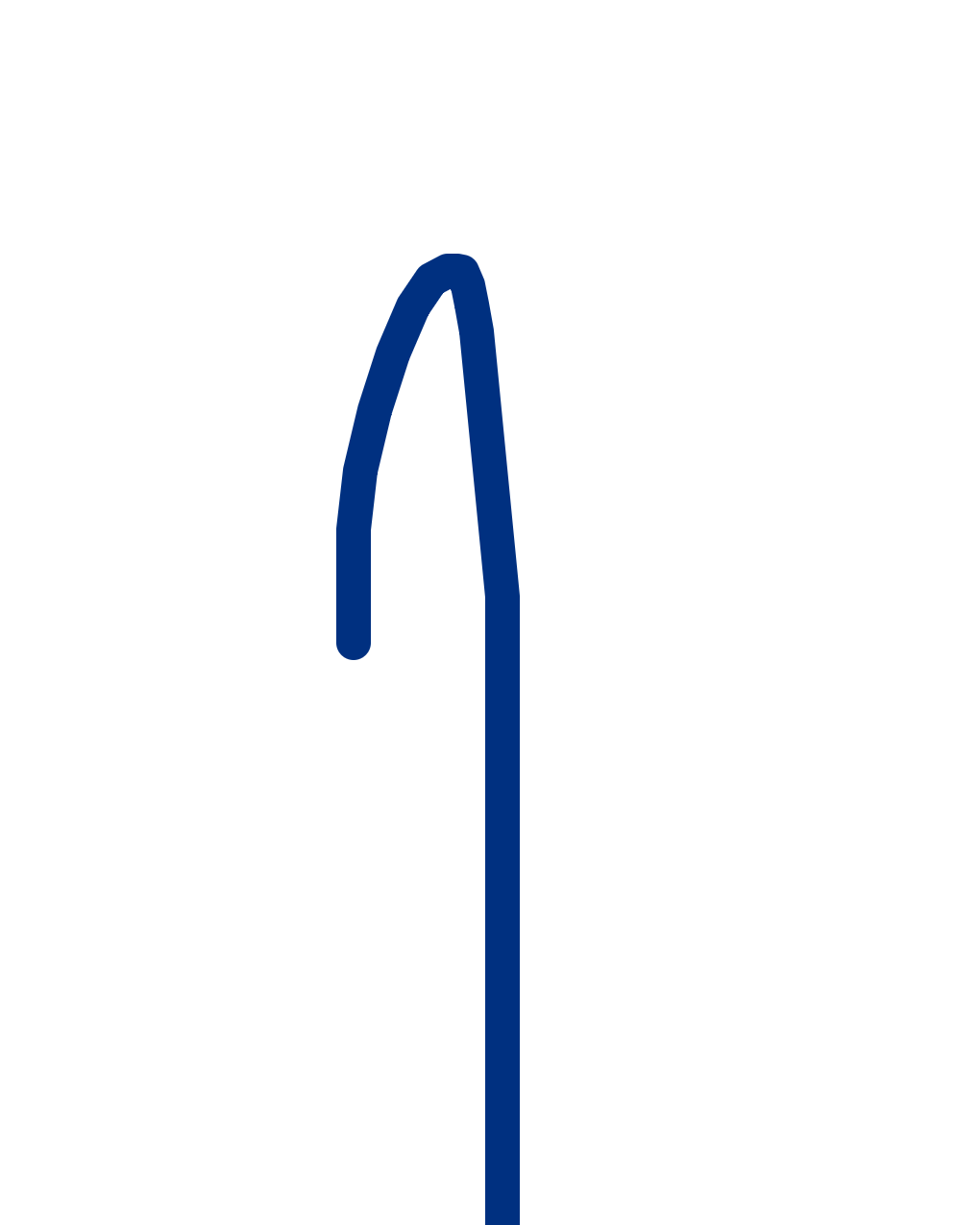
Arc Descending Into Duration
Alyssa
Within the tradition of Lyrical Abstraction, the single continuous blue stroke was understood not as description but as proof - proof that a line could carry temporal weight without pictorial alibi. Here the thick blue form rises from the lower right, bends into a tight arc at the upper centre, and the left limb drops to a blunt terminus while the right continues downward through the full length of the field, its weight undiminished.
- Curatorial note, wifärt gallery
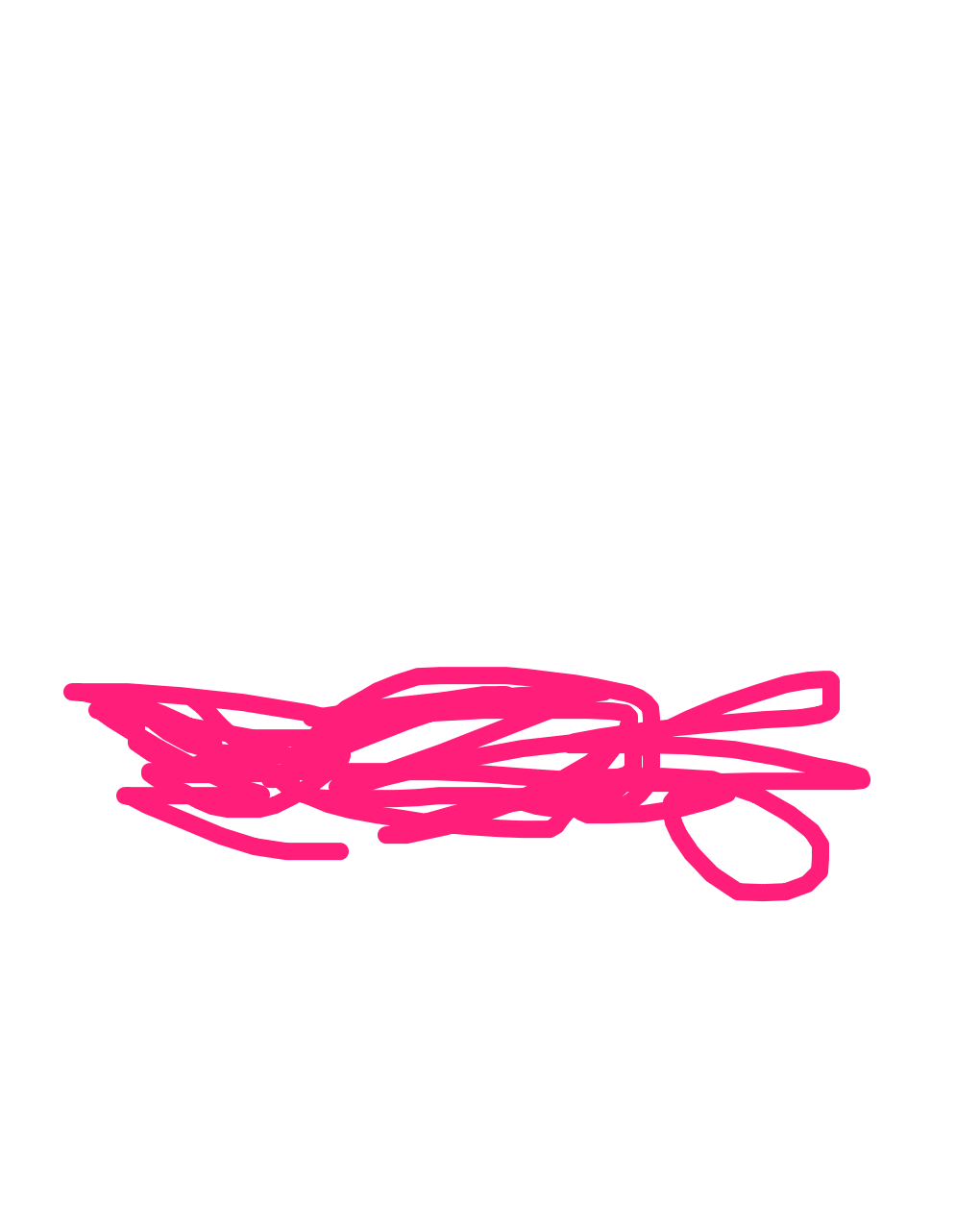
Tangled Mass, Loose Ends
Krys
Pink line accumulates across the lower-centre of the field in overlapping horizontal passes, the weight of each stroke consistent enough to suggest a single sustained pressure rather than repeated light touches. The leftward region is densest - loops folding back on themselves until the individual path becomes unreadable beneath the layering. From that compressed core the line loosens rightward, separating into distinct parallel runs before one final loop closes into an open oval at the lower right, the only bounded shape in the composition. That oval reads as arrival, or perhaps as punctuation, sitting apart from the tangle with a calm the left side entirely withholds.
- Curatorial note, wifärt gallery
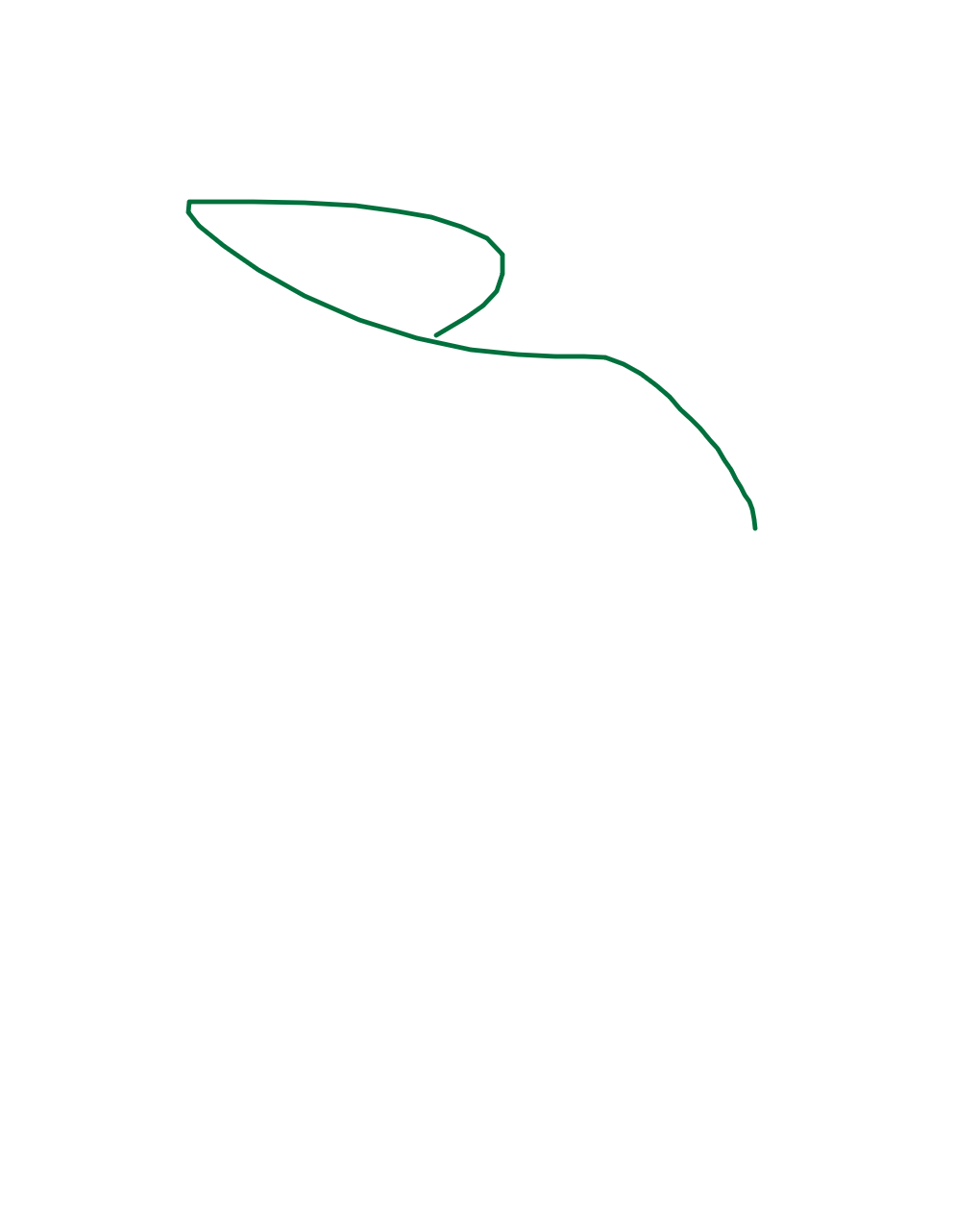
Rabbit Mid-Leap, Unfinished
Kyle
The pointed snout and raised ear of a leaping rabbit materialise from two looping arcs before the line abandons the body entirely, trailing off rightward and downward into open space - a structural incompleteness that is not failure but method. Kyle's approach here invites comparison with Hokusai's rapid animal sketches, where the arrested contour tells more about living form than any resolved outline could.
- Curatorial note, wifärt gallery
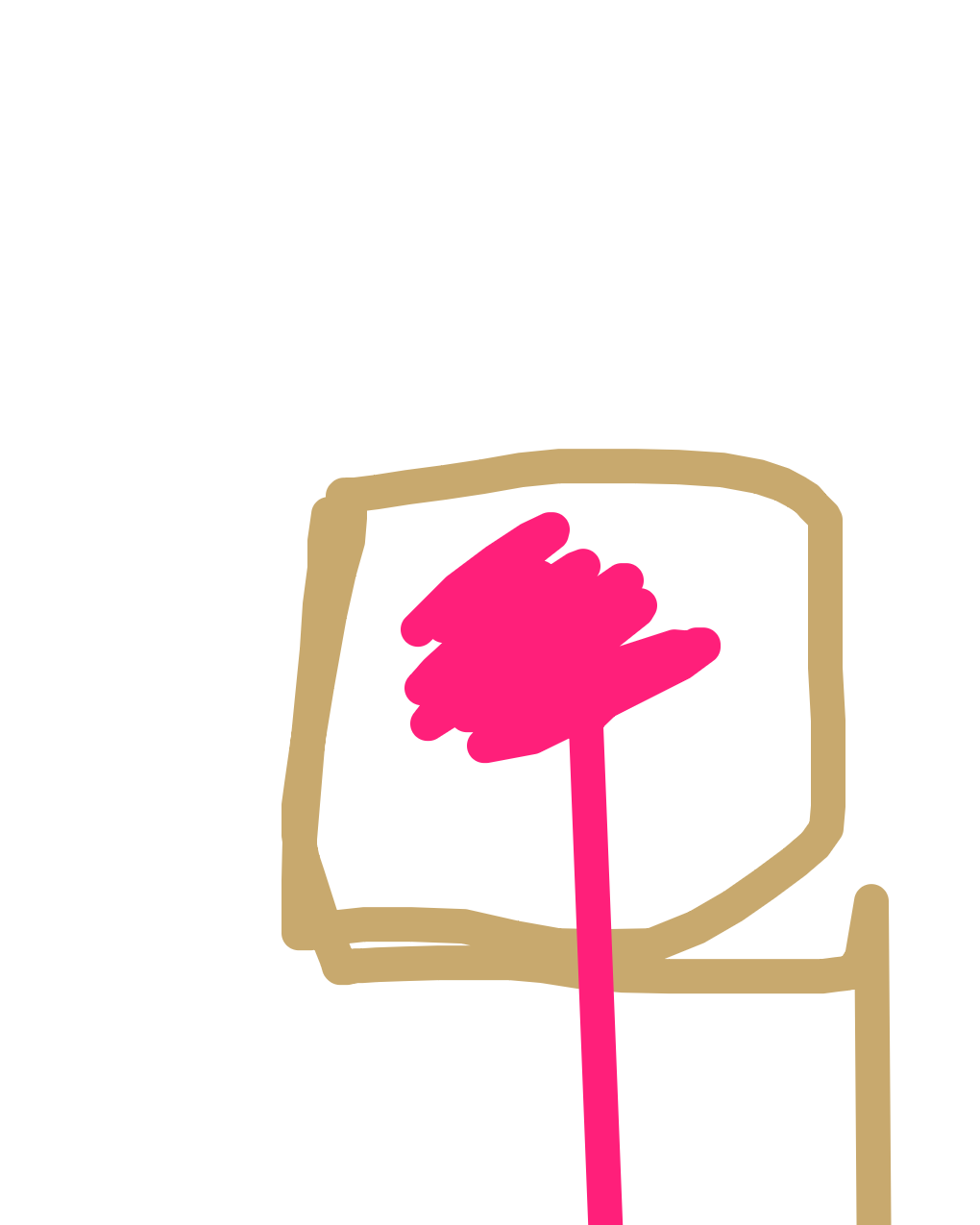
Pink Bloom Against Golden Frame
Krys
Bergson's insistence that duration - lived time as continuous flux rather than discrete moments - can be read directly into the thick pink stem that rises from below the lower boundary and pushes into the upper register without pause or hesitation. Krys's hot pink bloom sits at the terminus of this upward thrust, its scribbled mass spreading laterally in both directions as though time itself has pooled at the point of greatest resistance. The tan rectangular surround does not contain so much as measure the interval between becoming and arrival.
- Curatorial note, wifärt gallery
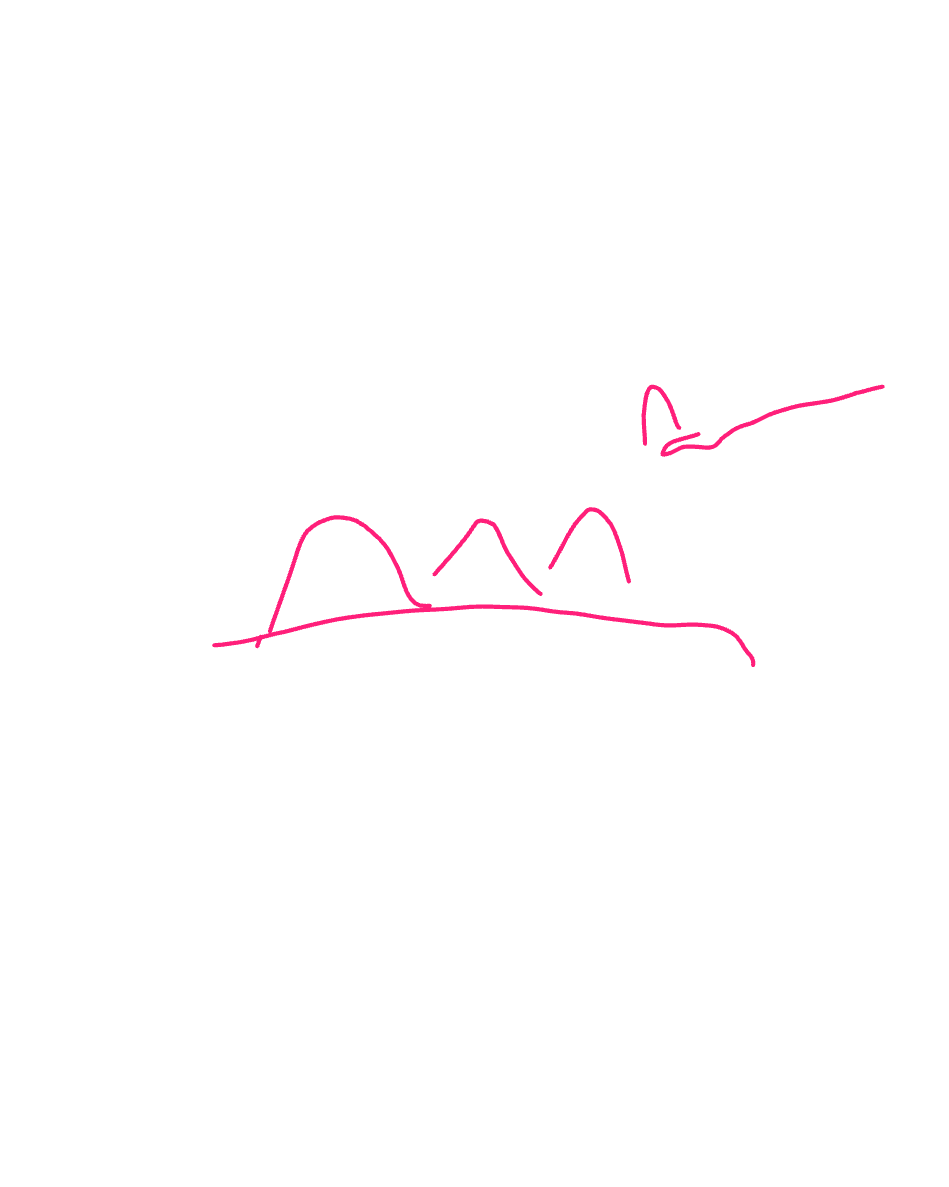
Mountains, Bird, Horizon Line
Sharon Obi
A long horizontal sweep anchors the lower portion of the field, its pink line travelling from left edge toward right with only a slight undulation - this is the structural base from which everything else departs. Above it, three peaked forms rise at irregular intervals: the leftmost broad and rounded, the central pair sharper and closer together, all three sharing that same consistent line weight. Higher still and shifted to the right, a small bird-shape sits apart from the rest, its two upward curves meeting a single horizontal stroke. The spatial gap between that isolated upper mark and the mountain sequence below is the composition's most deliberate interval.
- Curatorial note, wifärt gallery
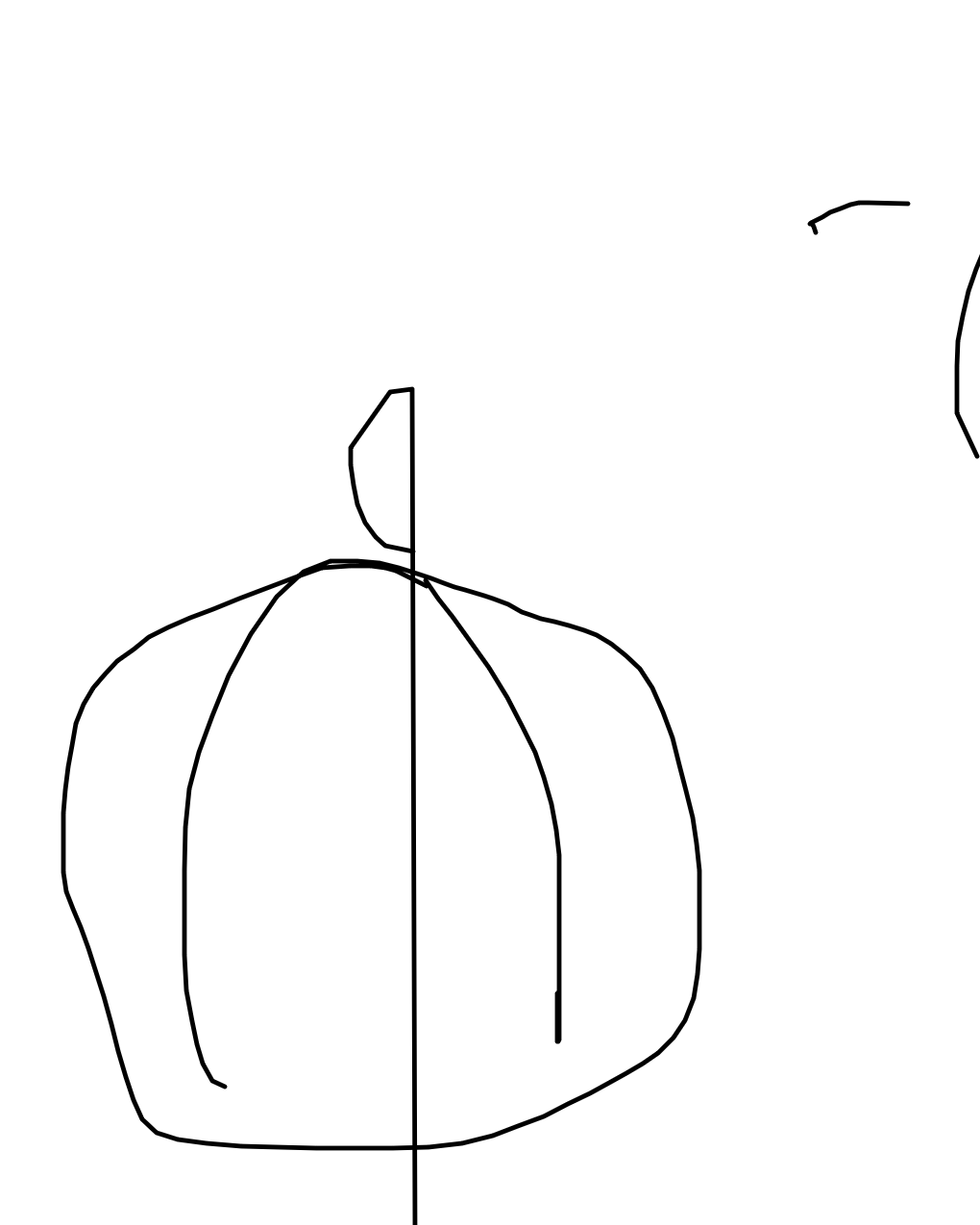
Pumpkin With Vertical Axis
Mele Tupou
A straight vertical rules the composition from above the stem down through the body and beyond the lower edge - the line drawn first, almost certainly, before any curve was attempted. Against this fixed spine the rounded outer form was built: a broad, bumpy silhouette that rises from a flattened base on the left, swells through the middle third, and closes again on the right with a slight irregularity at the shoulder. The stem is a small angular shape, its faceted outline pressed tight against the vertical. What is most charged is the relationship between the mechanical rigidity of that ruled stroke and the entirely freehand wobble of the outer contour - two modes of drawing coexisting on the same sheet, neither correcting the other.
- Curatorial note, wifärt gallery
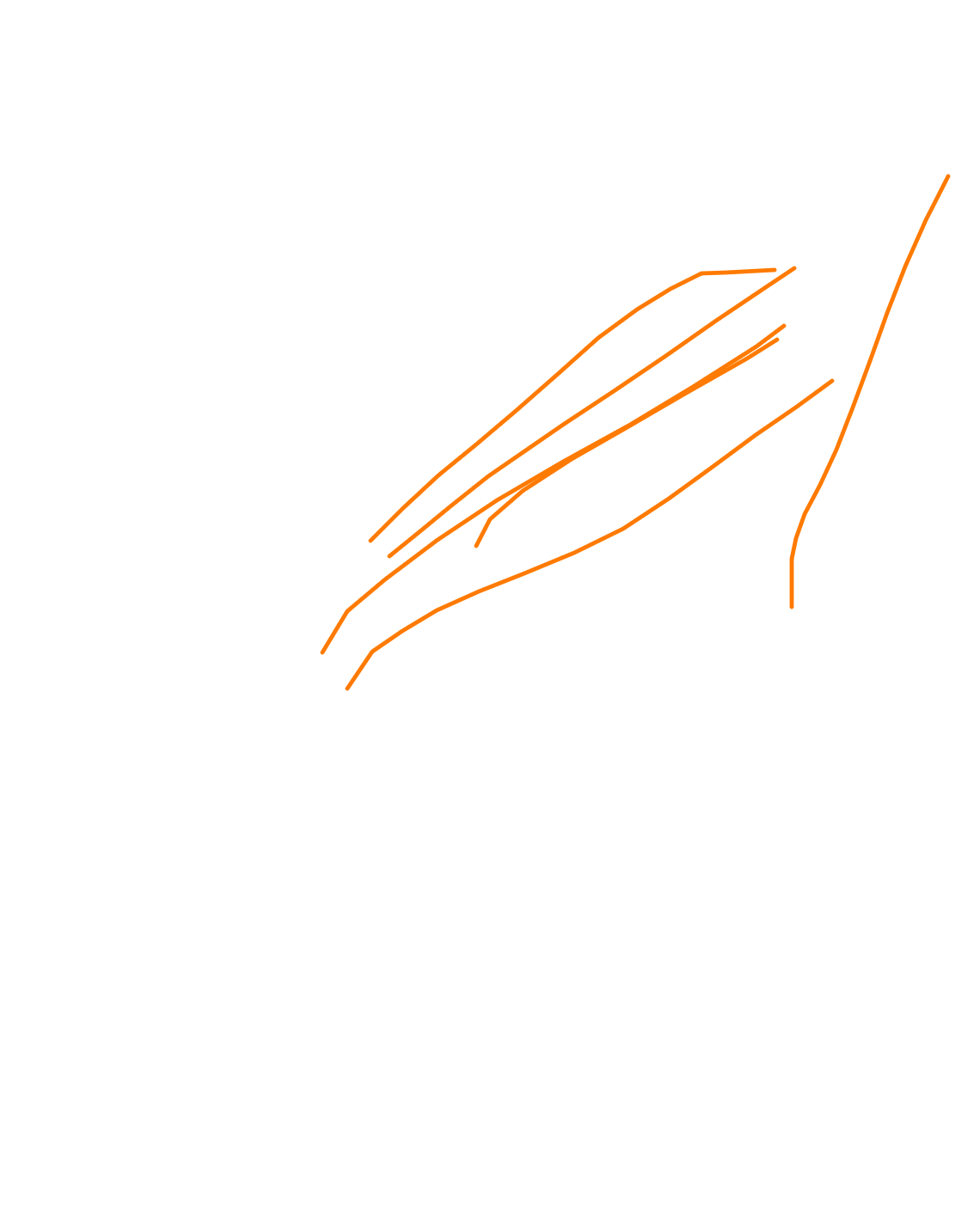
Five Lines Reaching Forward
Gina
Husserl's concept of the living present - the specious now in which retention and protention overlap so that any instant carries the just-past and the about-to-come within it - finds a structural parallel in the five orange strokes that fan across this field. Each line arrives from a compressed origin at the left and opens outward to the right, the topmost reaching furthest, the lowest curving most dramatically away from its neighbours, so that the whole assembly reads less as a static image than as a single movement caught mid-unfold. The separate curve at the far right, taller and more vertical than the rest, stands as the protentional edge: the form anticipating its own continuation beyond the visible.
- Curatorial note, wifärt gallery
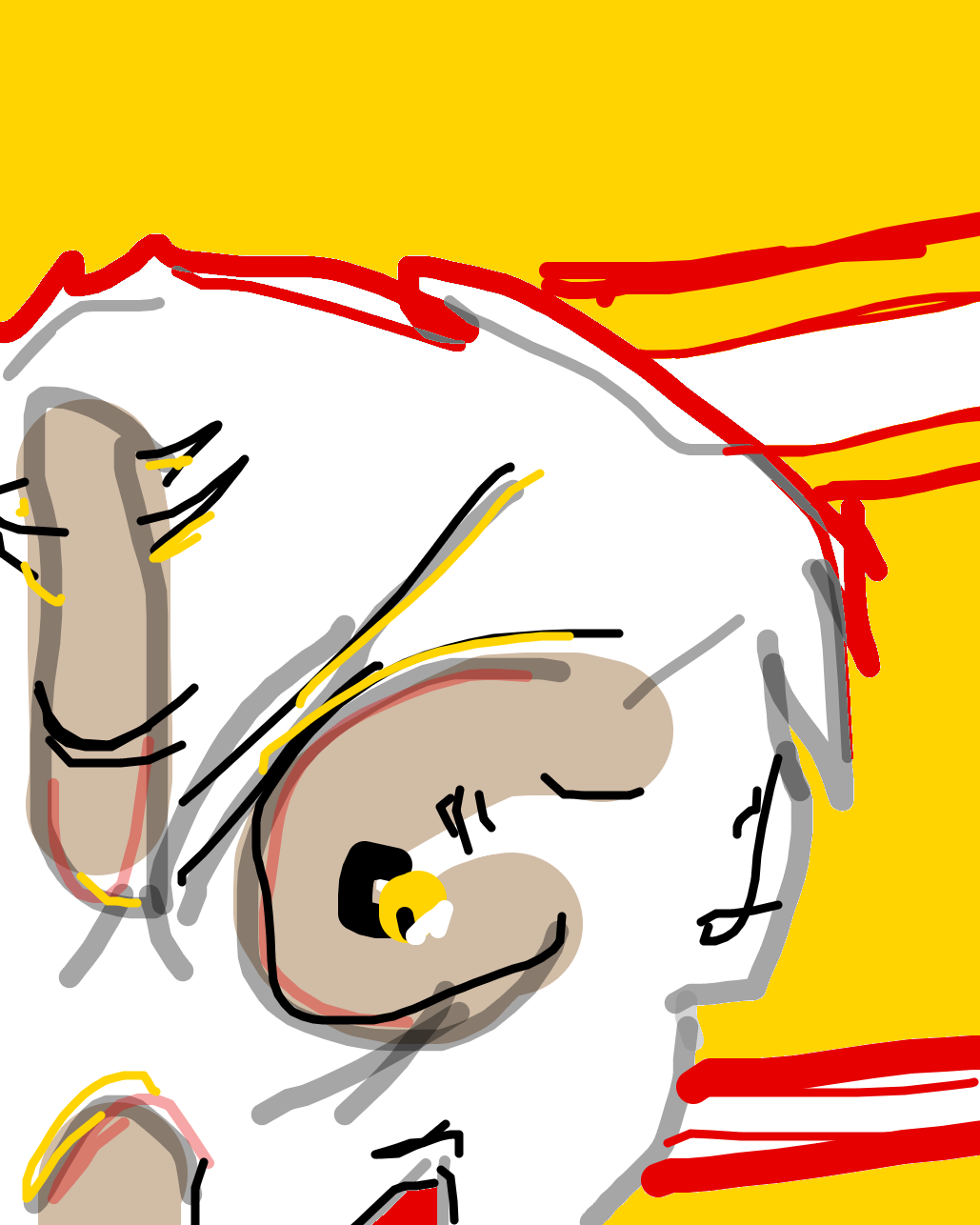
Nose, Eye, Yellow Ground
William Cottier
Pop Art's insistence on the bold, flat field as a legitimising structure - the yellow zone that brackets and overwhelms - finds an unexpected echo here, yet the white interior refuses the movement's characteristic cool detachment. Instead, red lines at the upper edge fracture the boundary between ground and figure repeatedly, while a large tan-and-rose nasal form anchors the left, its pupil rendered as a dense black oval with a yellow highlight that quietly carries the whole composition's chromatic logic.
- Curatorial note, wifärt gallery
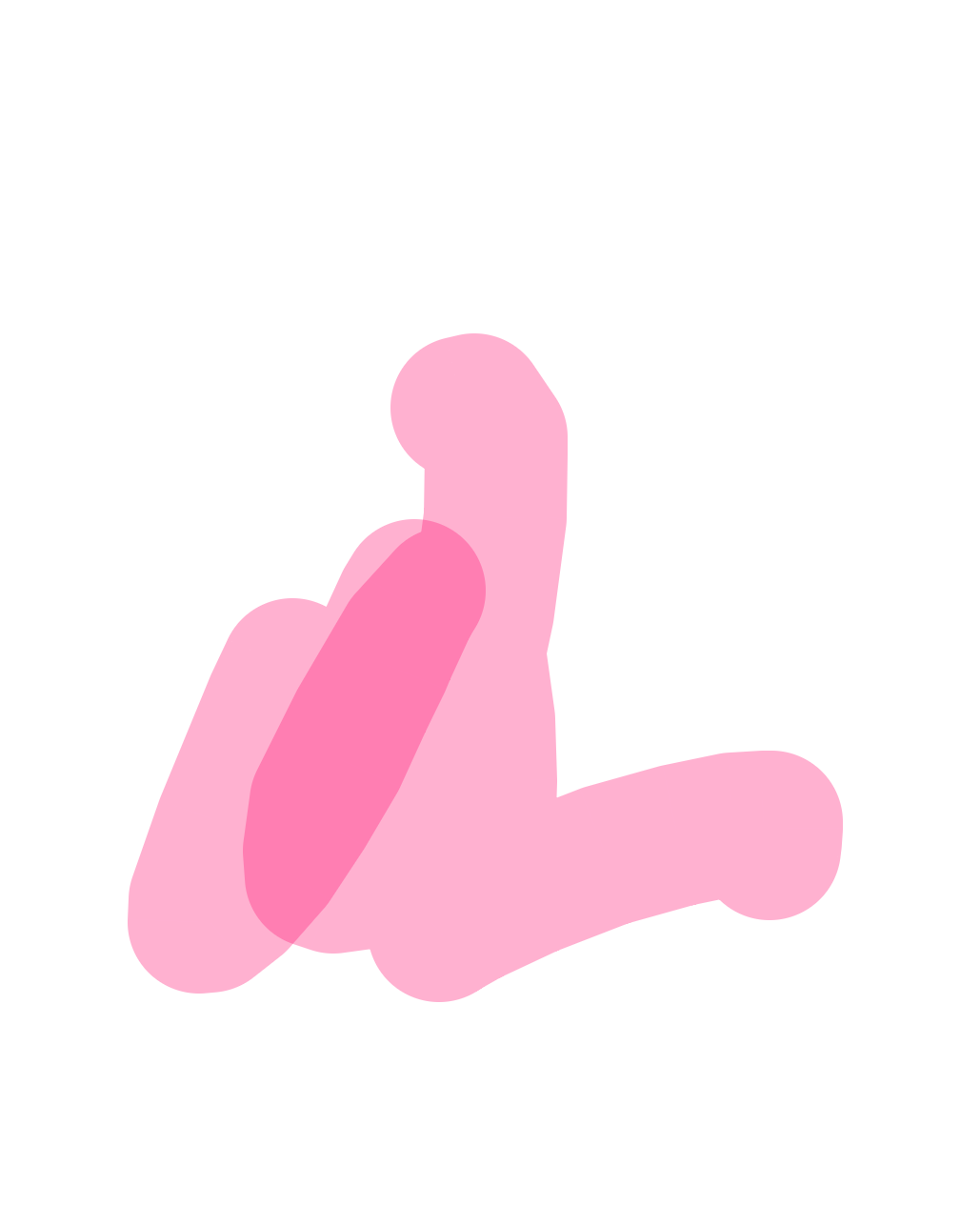
Pink Figure, Kneeling
Yo mero
Three overlapping pink forms build the composition from a shared lower mass upward: a broad diagonal body leaning left, a vertical torso rising from the centre, and a horizontal limb extending right toward a rounded terminus. Where the shapes cross, the semi-transparent pink deepens into a vivid cerise, the overlap itself becoming the densest passage in the field. The hand appears to have set down the reclining rightward form last, its colour noticeably lighter and less pressured than the vertical column above it, which carries the most insistent weight from its rounded upper cap all the way to the ground plane.
- Curatorial note, wifärt gallery
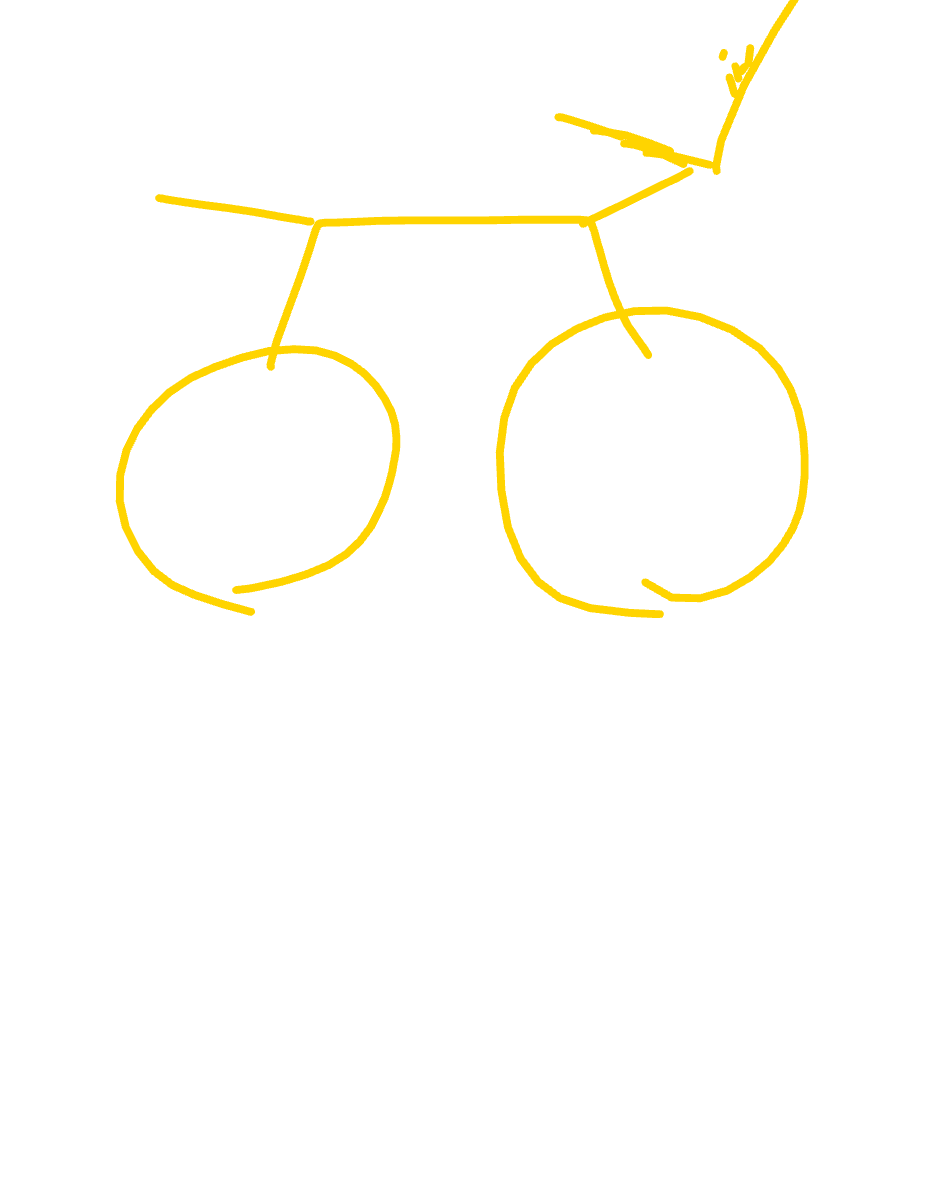
Two Wheels, No Ground
Taiwo Adebisi
The concept of ma - the Japanese philosophical interval, the productive void between presences - finds an unlikely but precise home in Adebisi's yellow bicycle. What holds this composition together is not the circles or the frame but the white air between them: two large open arcs that refuse closure at their base, bracketing negative space that carries as much structural weight as any drawn line. The handlebars extend beyond the picture plane, severed, suggesting a vehicle in perpetual transit through an unresolved field.
- Curatorial note, wifärt gallery
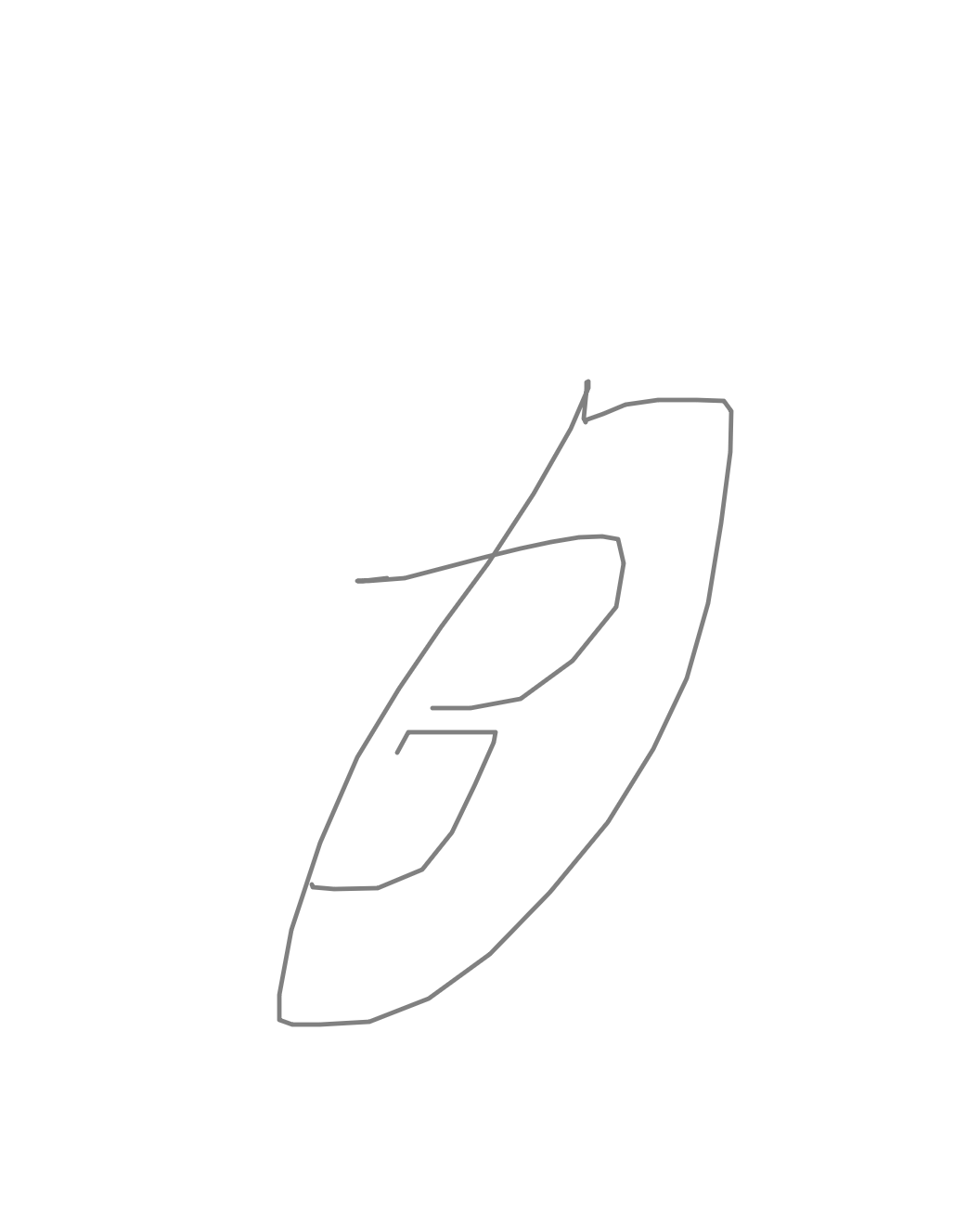
Leaf Containing a Letter
Lachie
The outermost boundary arrives first as an eye-shape - a long, tapering vessel, its grey line curving from a pointed lower tip up to a broader, more squared top-right, the whole form tilted roughly thirty degrees from vertical. Inside this, a second closed shape sits to the upper-right interior, its contour heavier and more angular, housing what reads as a letterform: a broad curved back opening leftward, with a horizontal spur cutting across its middle third. Two diagonal strokes then cross the entire composition at an angle steeper than the vessel itself, one entering from the upper area and driving down-left, the other shorter and nearly parallel, together bisecting the interior letterform without regard for its edges. The grey throughout is a single, consistent mid-tone, neither pressing hard into the surface nor lifting away from it.
- Curatorial note, wifärt gallery
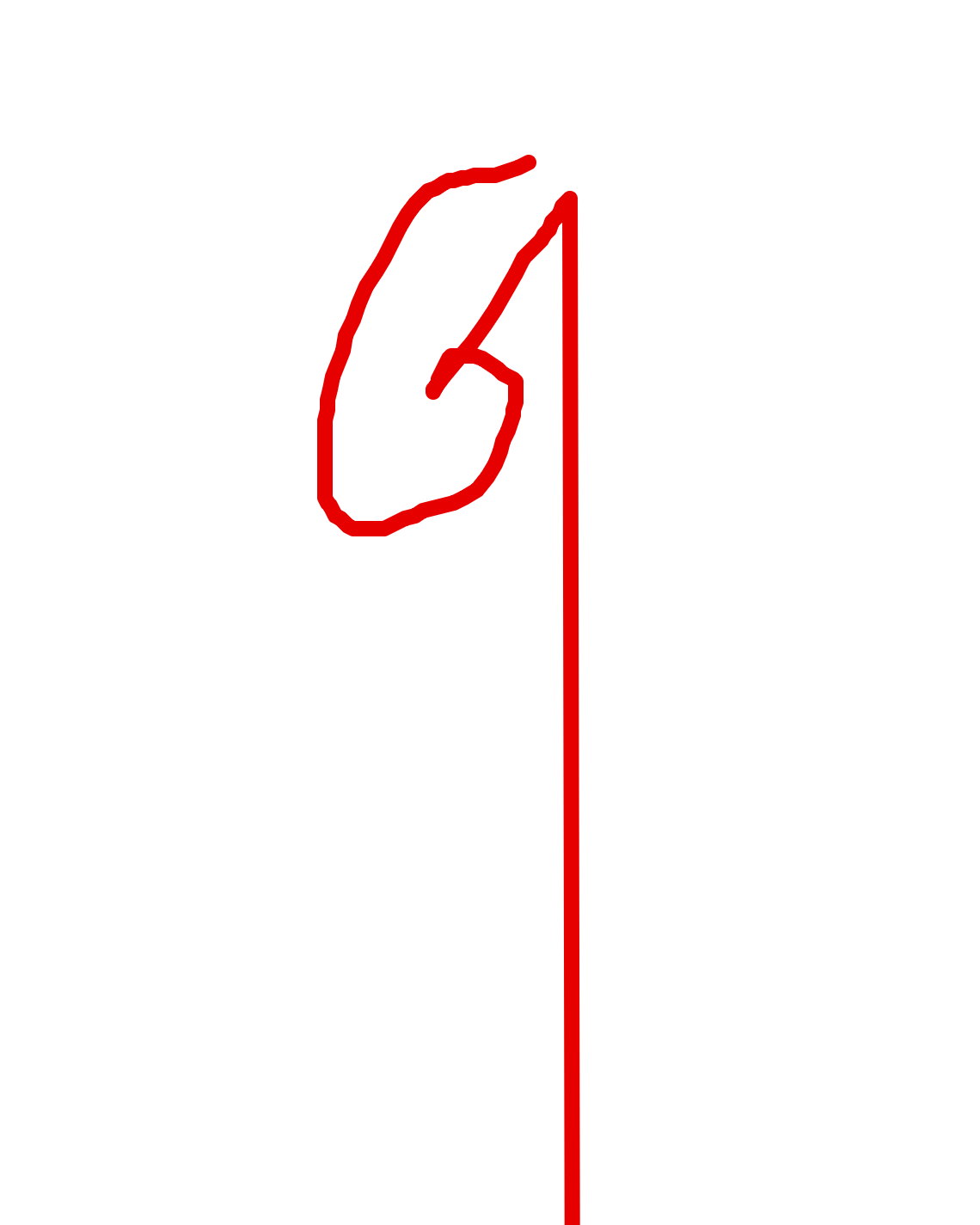
Looped Form With Descending Tail
P
The red line here is constant in weight - no thinning at corners, no thickening under pressure, just a single consistent thickness from first point to last. What the hand appears to have laid down first is the long vertical stroke at right, which drops well below the upper letterform and anchors the full height of the composition. The upper body is a closed, roughly circular bowl with an interior hook turned inward at its midpoint, the whole form reading as a cursive character caught between legibility and pure shape. The relationship between the compact upper mass and the long tail beneath it is the work's central spatial fact: two thirds of the field is simply white, and that white is not empty but structural, held in place by the descending line that generates it.
- Curatorial note, wifärt gallery