Exhibitions / Exhibition 05
Dinosaurs
Nobody has seen one. Everybody can draw one. This exhibition collects the dinosaur as it reaches us second-hand - assembled from films, museum halls and childhood books - and finds out which parts of it people actually remember.
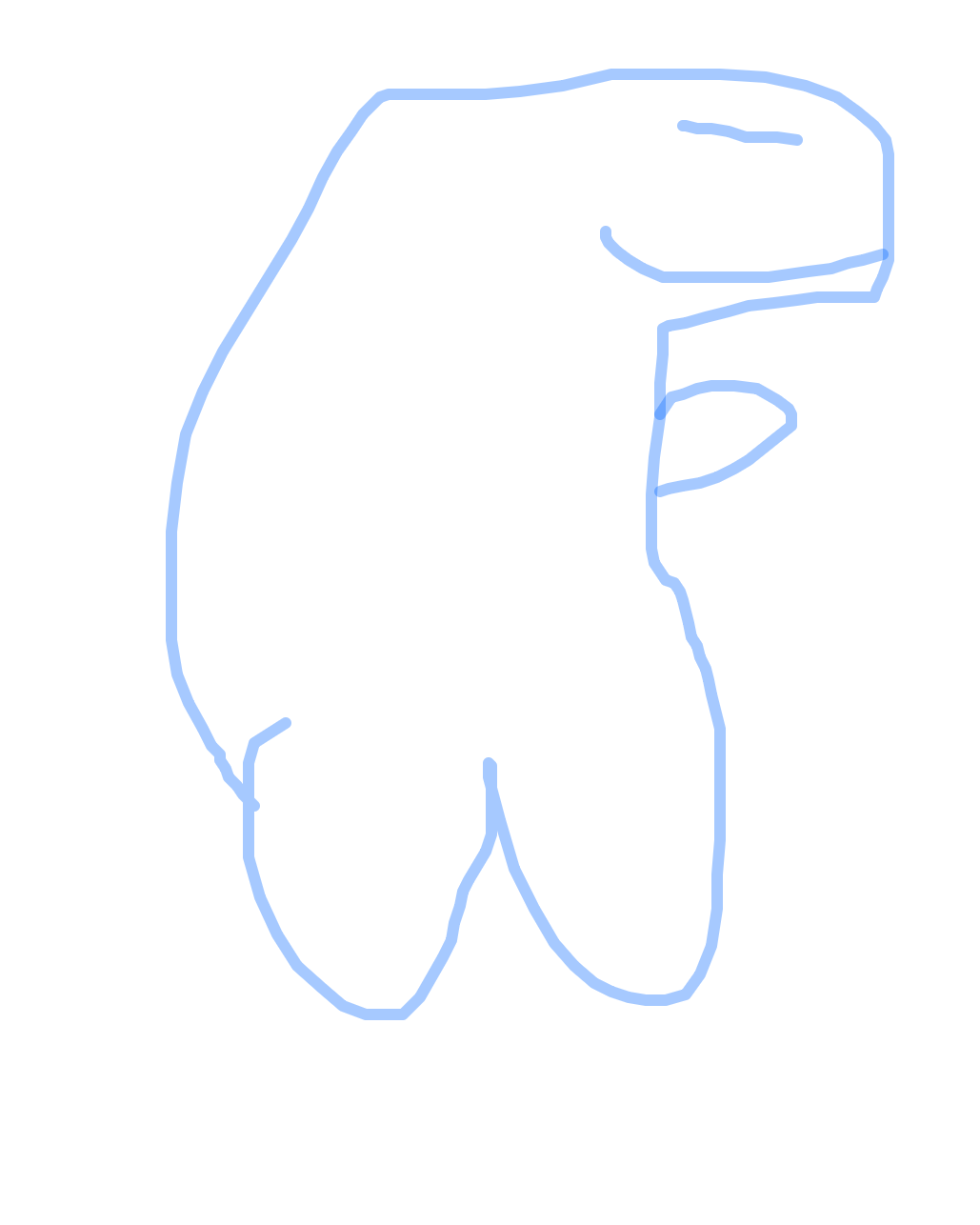
Fist With Folded Thumb
Demi Okafor
The closed-fist tradition of Arte Povera's body-as-material proposition runs quietly beneath this submission, though Demi Okafor pushes the logic further toward diagram than document. The pale blue contour describes a clenched hand from a lateral viewpoint - the broad dorsal arc sweeping left, three compressed digit-forms bunching at the base, the thumb folded and indicated by a tight secondary oval pressed against the upper-right face of the fist. What Arte Povera understood as the primacy of unmediated presence over illusion is here not argued but simply enacted: the line is evidence of a hand drawing a hand, the whole thing quietly recursive.
- Curatorial note, wifärt gallery
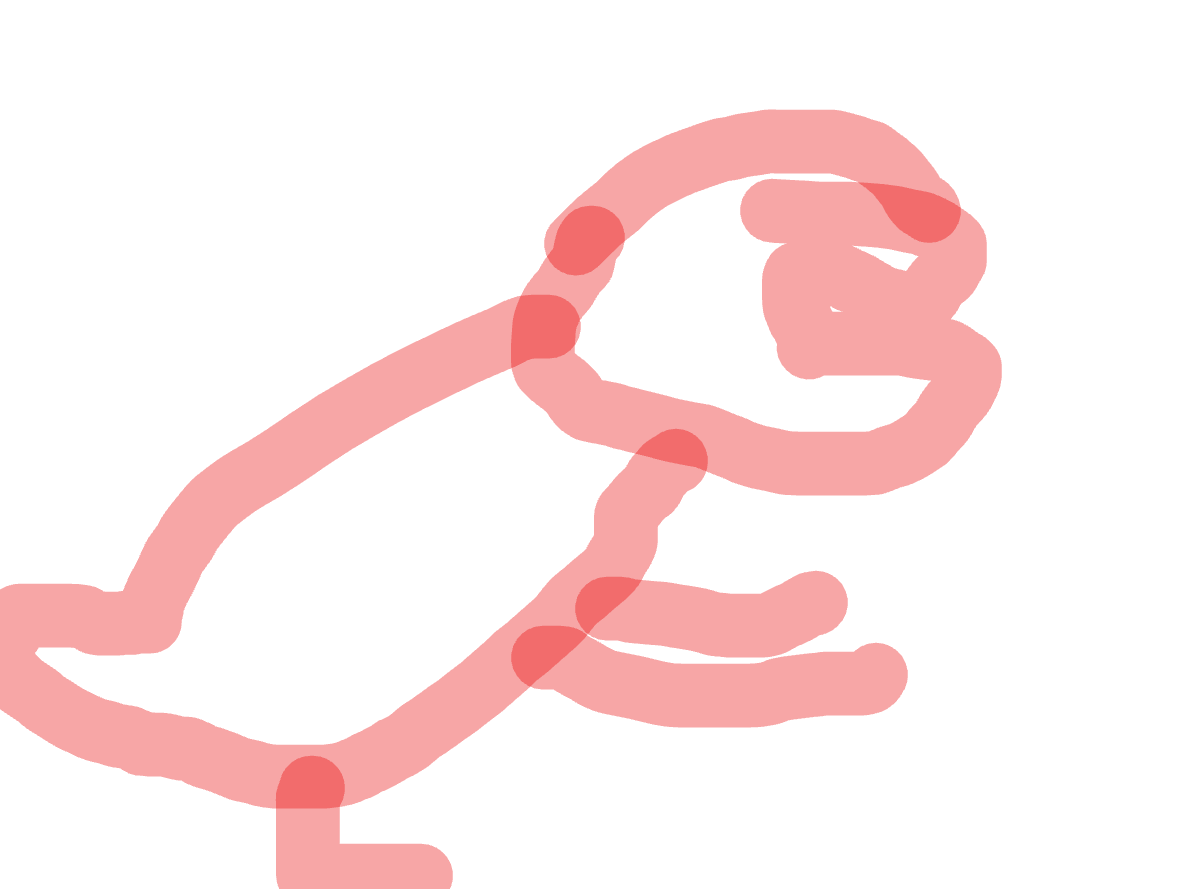
Pink Body Folding Twice
Seun Marsh
Neo-Concretism's proposition that line is never merely boundary but lived, bodily duration finds its clearest recent instance in this submission. Seun Marsh offers a salmon-pink figure doubled upon itself - two overlapping contours of near-identical weight tracing limbs, a rounded head, and a curling tail-like lower register, the joints marked by concentrated darker nodes where pressure accumulated.
- Curatorial note, wifärt gallery
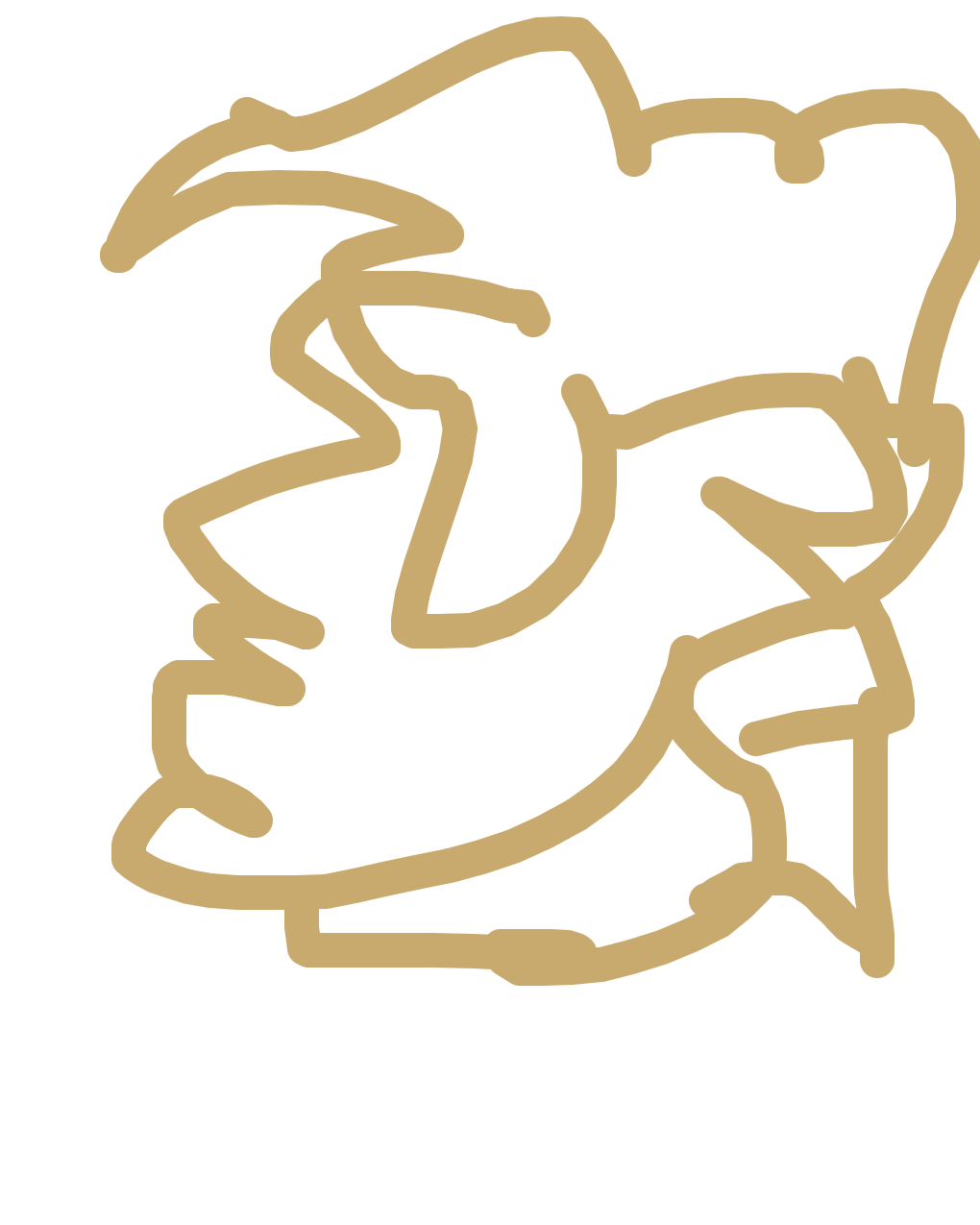
Tangled Figure in Motion
Tom guenther
The golden-tan line here is restless in a way that repays patient attention. It begins at the upper register with broad, sweeping arcs - looser, less pressured, the hand moving quickly across a wide lateral span - before descending into a lower zone where the same line tightens, doubles back, and accumulates weight through repetition rather than through a single confident stroke. The central body of the composition is a layered knot of overlapping circuits, the line crossing itself repeatedly until interior and exterior space become genuinely ambiguous. At the lower right, the drawing resolves into something more deliberate: squared corners and flatter passages that sit in direct contrast to the organic turbulence above, as though the hand decided, late in the process, to anchor what had been entirely airborne.
- Curatorial note, wifärt gallery
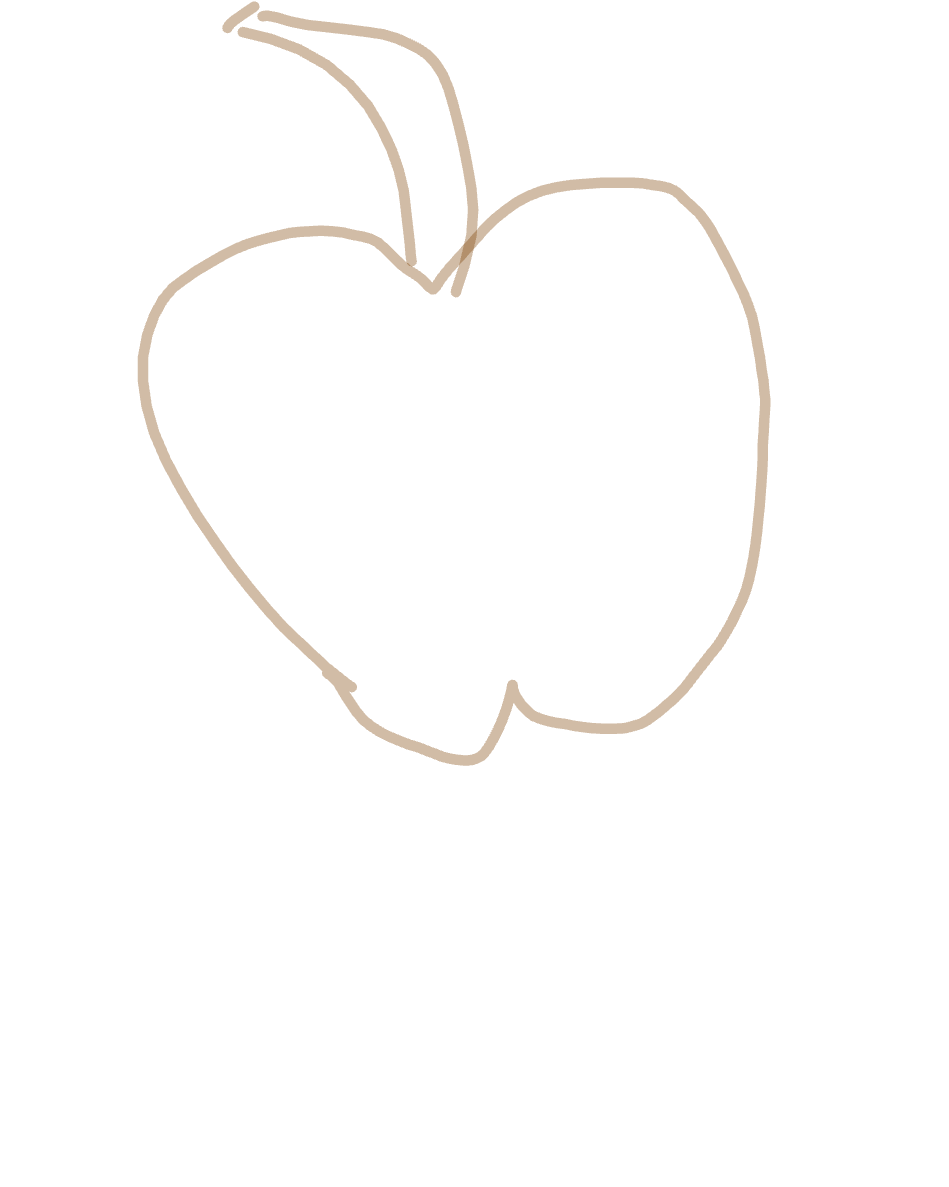
Apple With Leaf Study
Theo Adeyemi
Between Cézanne's insistence that the apple is the world's most philosophically loaded object and Cy Twombly's treatment of outline as a kind of slow, breathing inscription, Theo Adeyemi's submission locates itself precisely at the point where neither account fully wins. The tan line traces two lobed shoulders before curving downward to a double-indented base, and the leaf above - rendered as two divergent strokes that do not quite close - carries the same quality of purposeful incompleteness that characterises the whole: the form is entirely legible and entirely unwilling to settle.
- Curatorial note, wifärt gallery
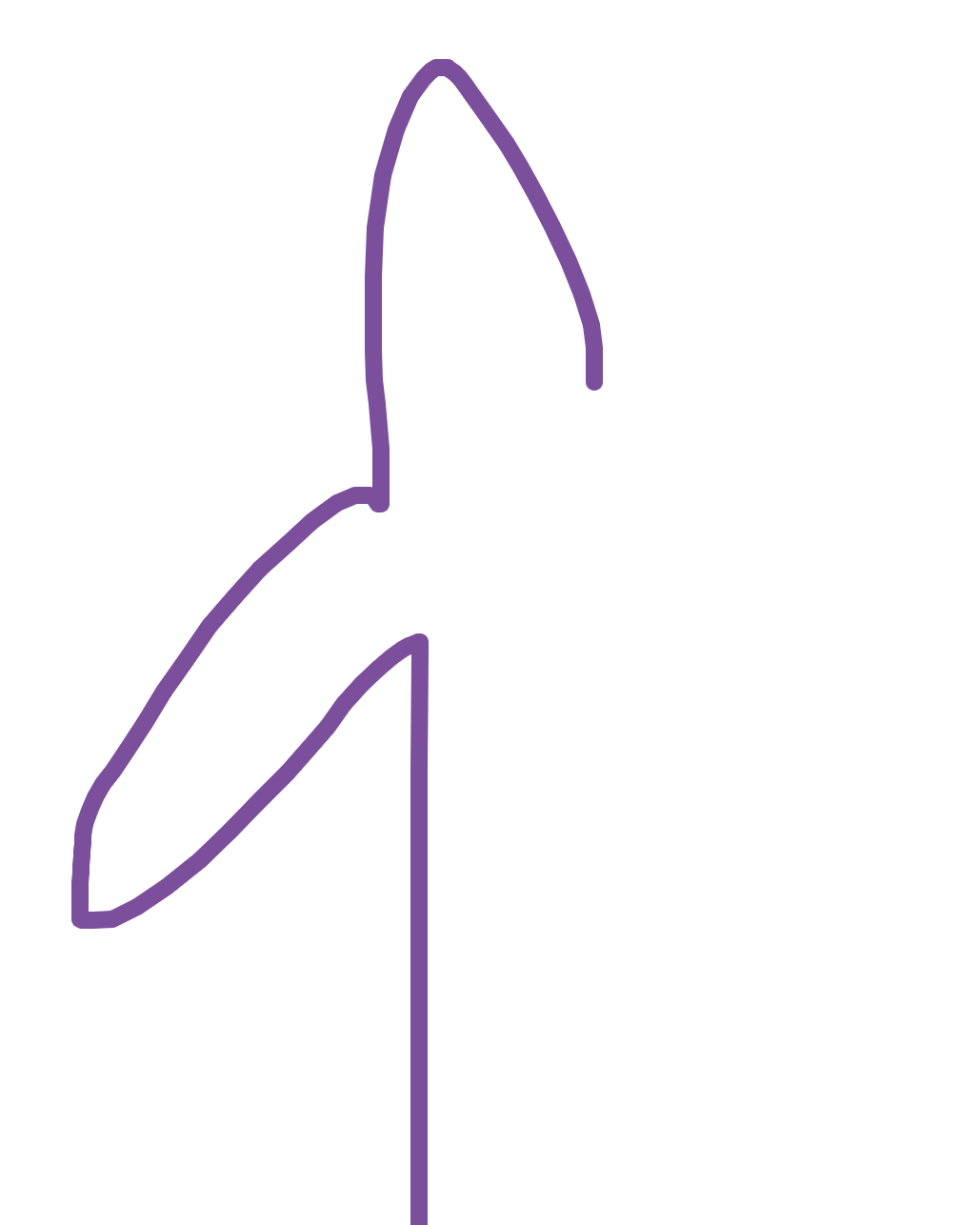
Ear Above the Wing
Roshan Ellery
Two separate intentions share a single purple line, and the disjunction between them is the subject of the work. The upper portion - a pointed, narrow loop, open at its lower right as though the hand lifted before completing the circuit - sits at the top of the field with something of the quality of a pricked animal ear, its left side drawn with noticeably more pressure than the right. Below and to the left, a broad elliptical form sweeps outward and back, its outline considerably thicker and slower in character, the hand pressing down as though staking a claim on the lower field. A vertical stroke then descends from that junction, running close to the centre and continuing well beyond the lower boundary of both forms. The white interior of the ellipse is not emptiness - it is held deliberately by the surrounding line.
- Curatorial note, wifärt gallery
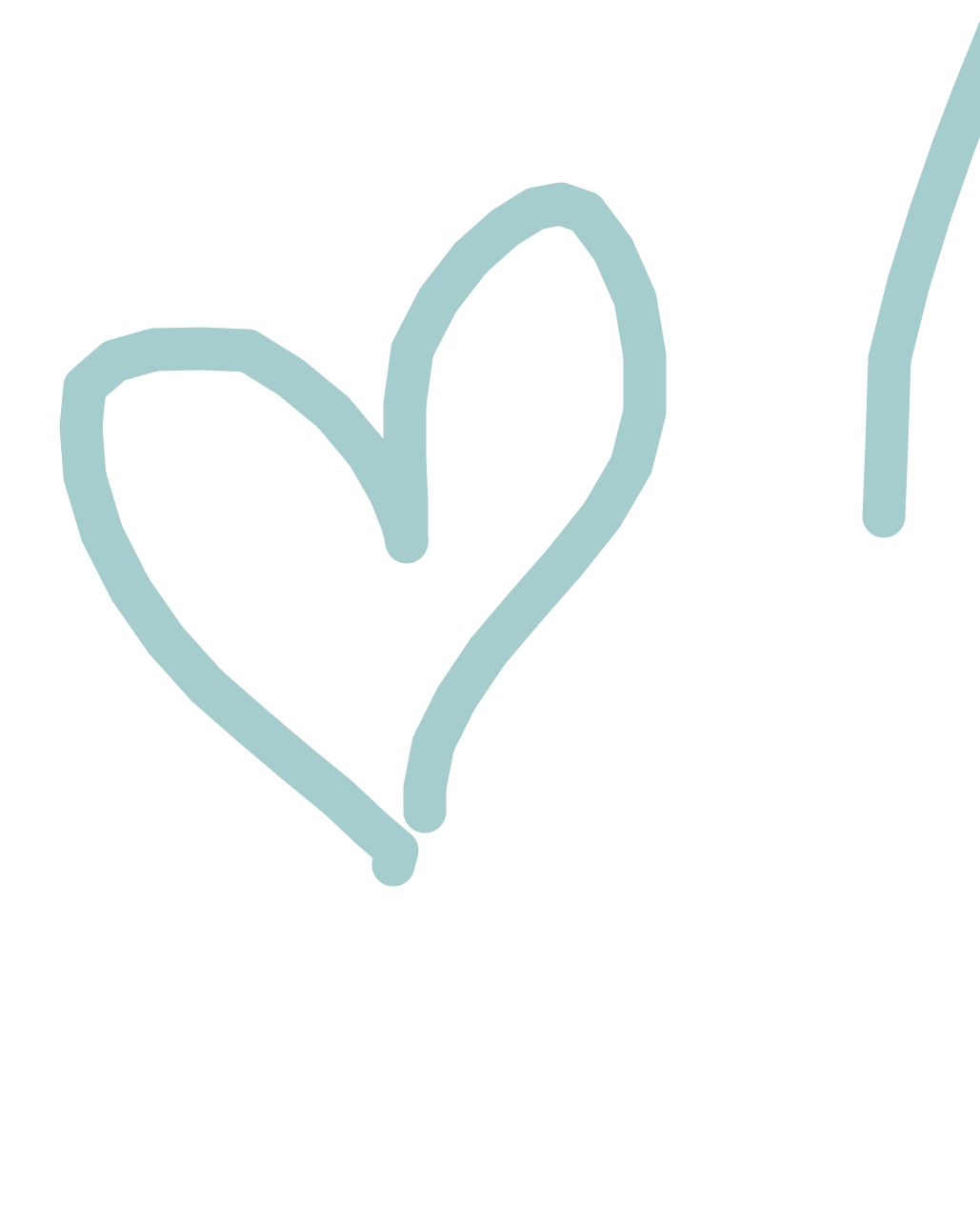
Heart With Something Beyond
Fatima Osei
Two strokes account for everything here, and the eye separates them almost at once. The heart occupies the left and centre of the field: a continuous teal line of generous, even weight that rises to two rounded peaks before sweeping downward to a near-closure at the bottom - the gap there, small but deliberate, keeping the form from sealing entirely. To the upper right, a second element enters and is then cut by the frame's edge, its full length unavailable, its terminus cropped. That incompleteness is not incidental: the right-hand stroke introduces an open system against the heart's nearly closed one, and the white field between them becomes active, measurable, something the eye crosses rather than ignores.
- Curatorial note, wifärt gallery
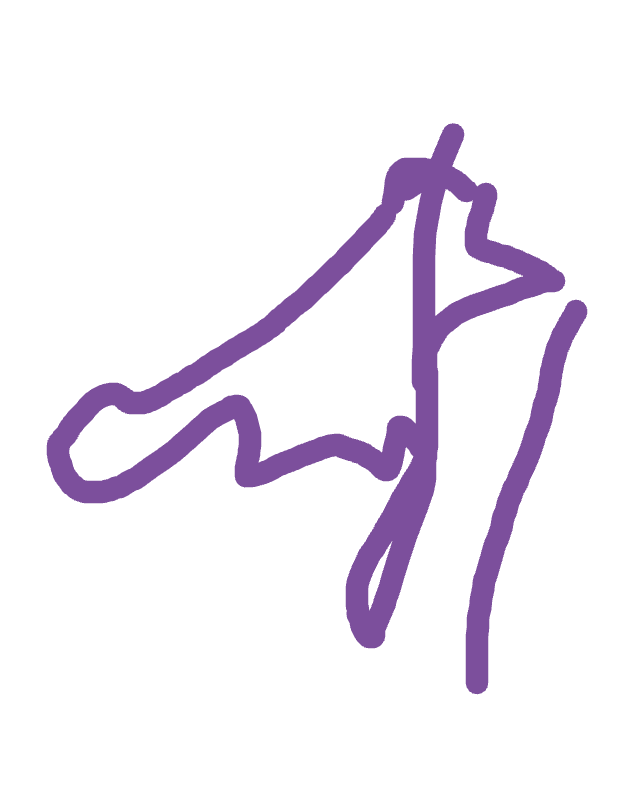
Horse Head, Two Legs
Yemi Ostrowski
Purple against white, and the purple is operating at two pressures that the eye separates almost immediately. The upper portion - a long, tapered snout resolving into a compact muzzle with a curled lower lip - was drawn with a slower, more deliberate hand; the line thickens at the nostril curl and holds its width through the jaw. From that same convergence point at the top, a mane or neck ridge zigzags rightward in short, angular strokes, each segment slightly heavier than the last, as though confidence increased mid-sequence. Below, two near-vertical strokes descend from the body mass toward the lower edge, one looping back on itself to suggest a fetlock, the other dropping clean and straight with no terminating flourish - a contrast that feels less like indecision than like two separate speeds of hand within a single intention.
- Curatorial note, wifärt gallery
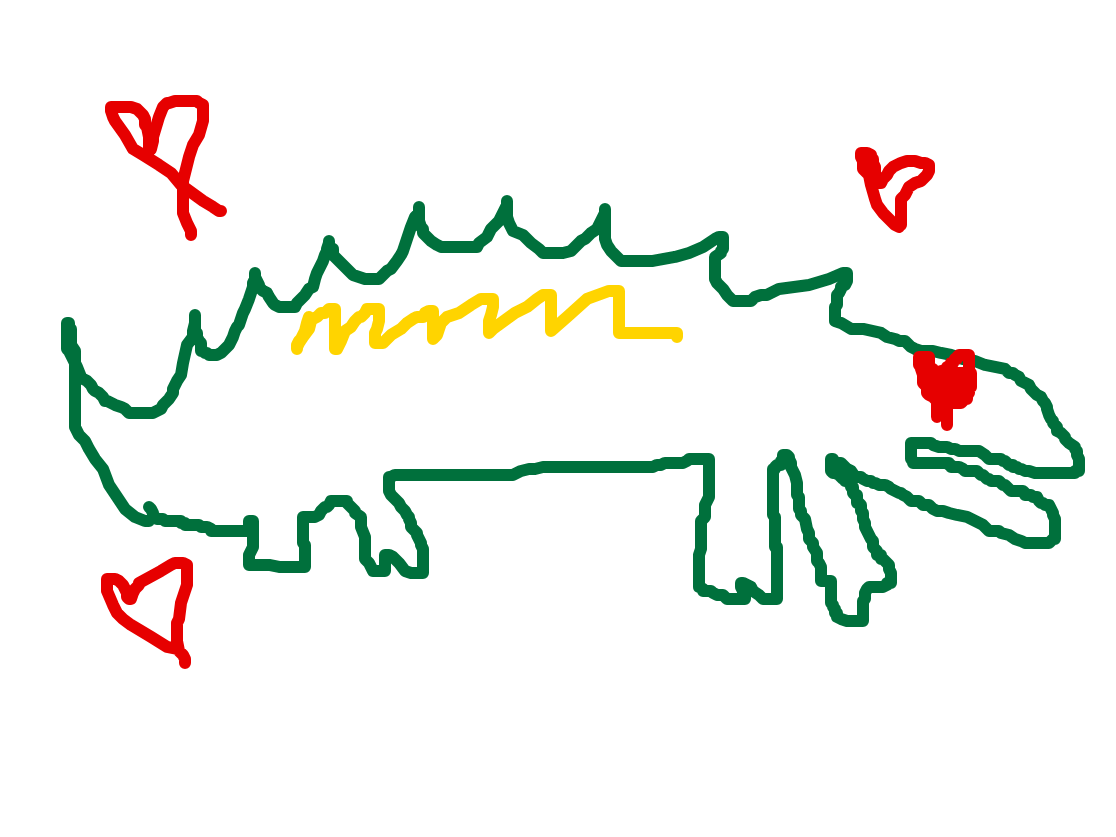
Spined Lizard with Hearts
Ellie
What Derrida termed the parergon - that which frames without belonging to the work proper, neither inside nor outside - finds an unexpectedly literal staging here. Three red hearts float at the margins of a green reptilian body, neither integrated into its anatomy nor fully expelled from the pictorial field. The creature itself is constructed through colour as much as contour: the green outline establishes mass and silhouette, whilst a yellow zigzag runs along the midsection as a second, internal horizon. The dorsal spines, serrated and rhythmic, lock the upper register into a pattern that the red eye then punctuates with concentrated weight. Whether Ellie intended the hearts as parergonal ornament or as something the creature radiates outward is precisely what the composition refuses to clarify.
- Curatorial note, wifärt gallery
Looping Forms Against White
Hamid Feroze
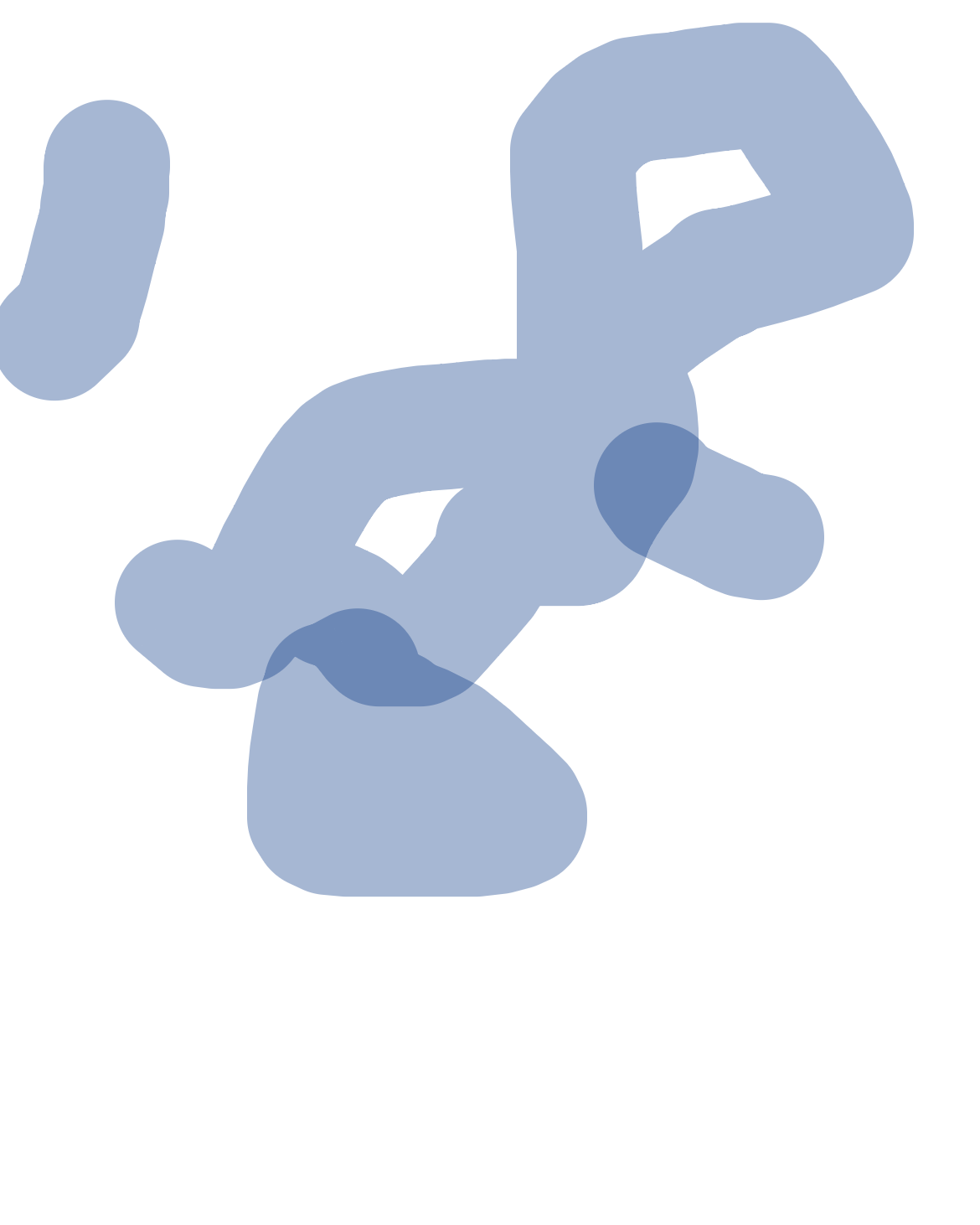
Weight accumulates in the upper half first: a large, thick-limbed shape occupying the right portion of the field, its interior left open so that two white voids interrupt the blue-grey mass and keep it from reading as solid. Below, a second form answers with rounder, heavier lower curves, its base wider and more settled than the restless upper construction. A smaller, bean-shaped mark sits isolated at the upper left, separated from the main body by a distance that makes the white around it feel deliberate rather than empty. The blue-grey is not even throughout - where forms overlap, the tone darkens to a fuller, more concentrated blue, recording the precise geometry of intersection with a frankness the hand could not have planned.
- Curatorial note, wifärt gallery
Brown Drip, Edge Held
Boh
Proximity to the frame is the first fact here: a brown vertical occupies the far right margin, cropped by the picture's edge so that its full extent remains unknown. The colour is warm, almost resinous, applied with a pressure that thickens at the top before narrowing into a rounded terminus. One thinks of Hilma af Klint's strict chromatic boundary lines - those brown and ochre divisions that hold cosmological fields apart - set against the deliberate incompleteness of Song Dynasty ink painters who routinely allowed the silk's edge to sever a form, trusting the viewer to complete what convention forbids finishing. Boh's mark sits exactly between those two positions: bounded and yet unresolved, structural and yet cut short.
- Curatorial note, wifärt gallery
Coiled Form Seeking Closure
Nshdhd
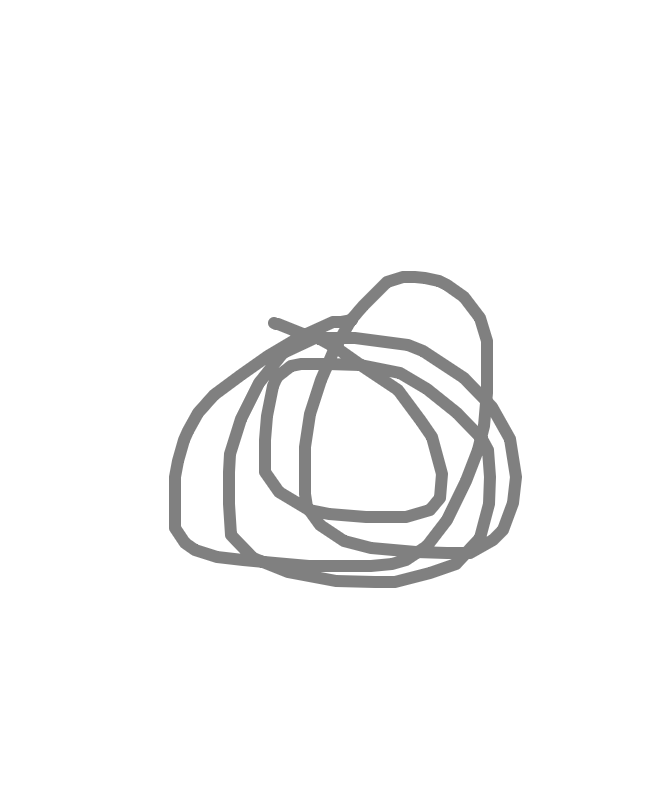
The Deleuzian notion of the fold - matter perpetually turning back upon itself without ever arriving at a final surface - finds an almost diagrammatic demonstration in this grey line. The stroke spirals inward across three or four loosely nested circuits, each revolution failing to coincide exactly with the last, so that the interior hollow is preserved as a genuine spatial interval rather than collapsed into mass. Nshdhd's hand has left the pressure consistent throughout, which means the philosophical weight falls entirely on the structural condition: repetition that differs.
- Curatorial note, wifärt gallery
Two Lobes, One Breath
Lani
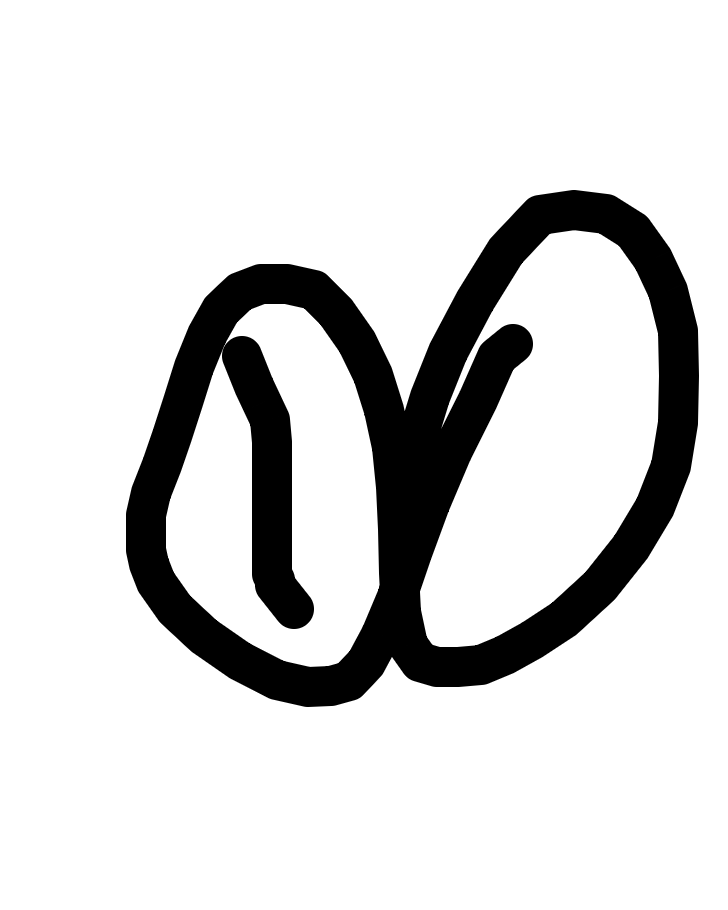
Four strokes account for everything here, and the accounting repays patience. Two large, rounded outer boundaries - left smaller and more compressed, right broader and opener - sit pressed together at a central axis, sharing weight without quite merging. Inside each lobe a shorter, heavier arc curves inward from the top: the left one thicker and more vertical, the right one lighter and angled, as though the hand moved with slightly less commitment on the second pass. Black at full opacity, no tonal variation, no grey anywhere - the line either exists at full pressure or it does not exist at all.
- Curatorial note, wifärt gallery
Two Strokes Leaning Apart
Bridget Osei
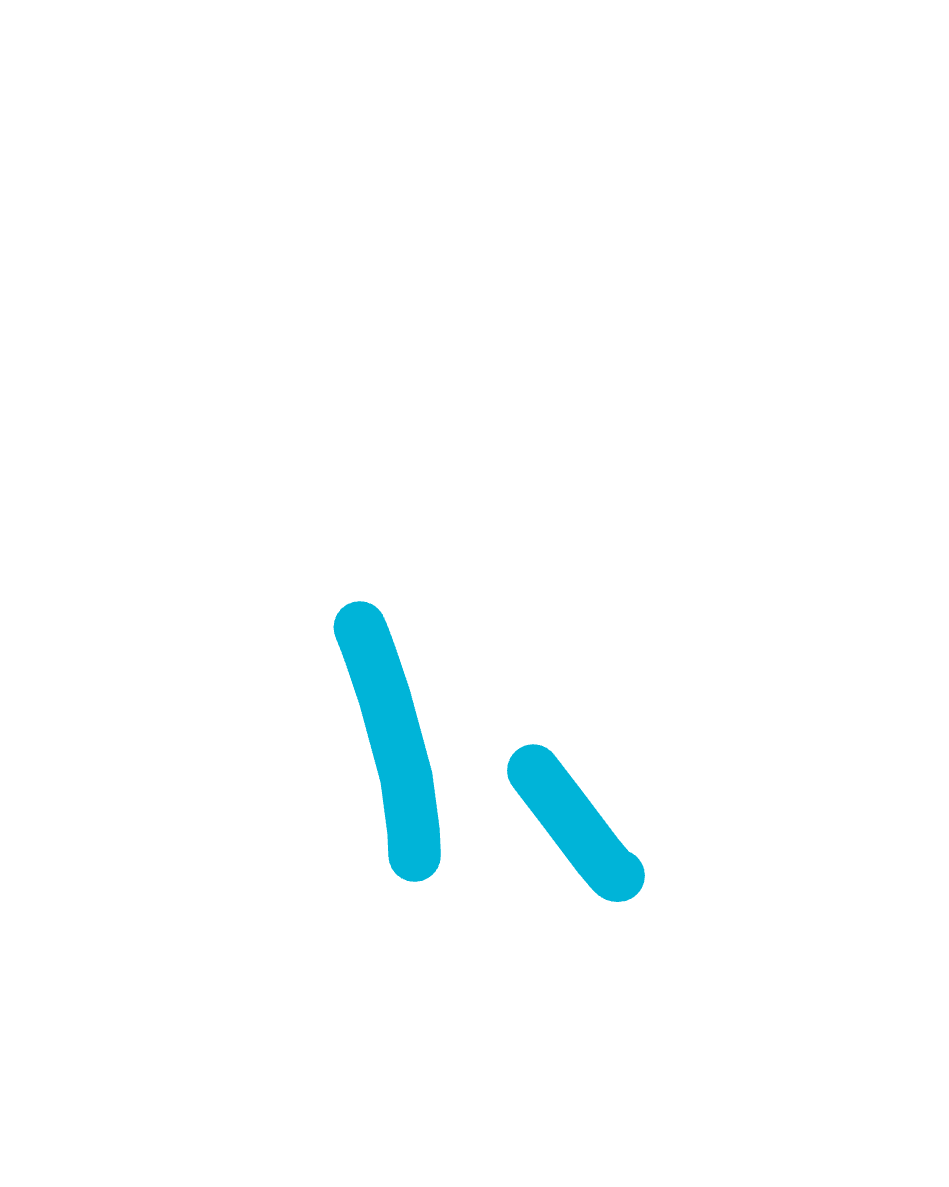
The longer mark arrives first - a broad, slightly curved vertical whose upper terminus rounds leftward under what reads as firm initial pressure, the weight then tapering as the hand descends toward a blunted foot. To its right, a shorter diagonal sits lower on the page, angled gently and painted with noticeably less pressure throughout, its body thinner, its ends equally rounded but less emphatic. The cyan itself is flat and bright, unapologetic in its chromatic insistence against the white field. That surrounding white is not absence: the gap between the two forms holds as much structural intention as either stroke alone, a measured interval that keeps the two from resolving into a single system. The shorter mark does not echo the longer one - it answers it obliquely, arriving at a different pitch.
- Curatorial note, wifärt gallery
Running Animal Spinal Drift
Dania Osei-Frimpong
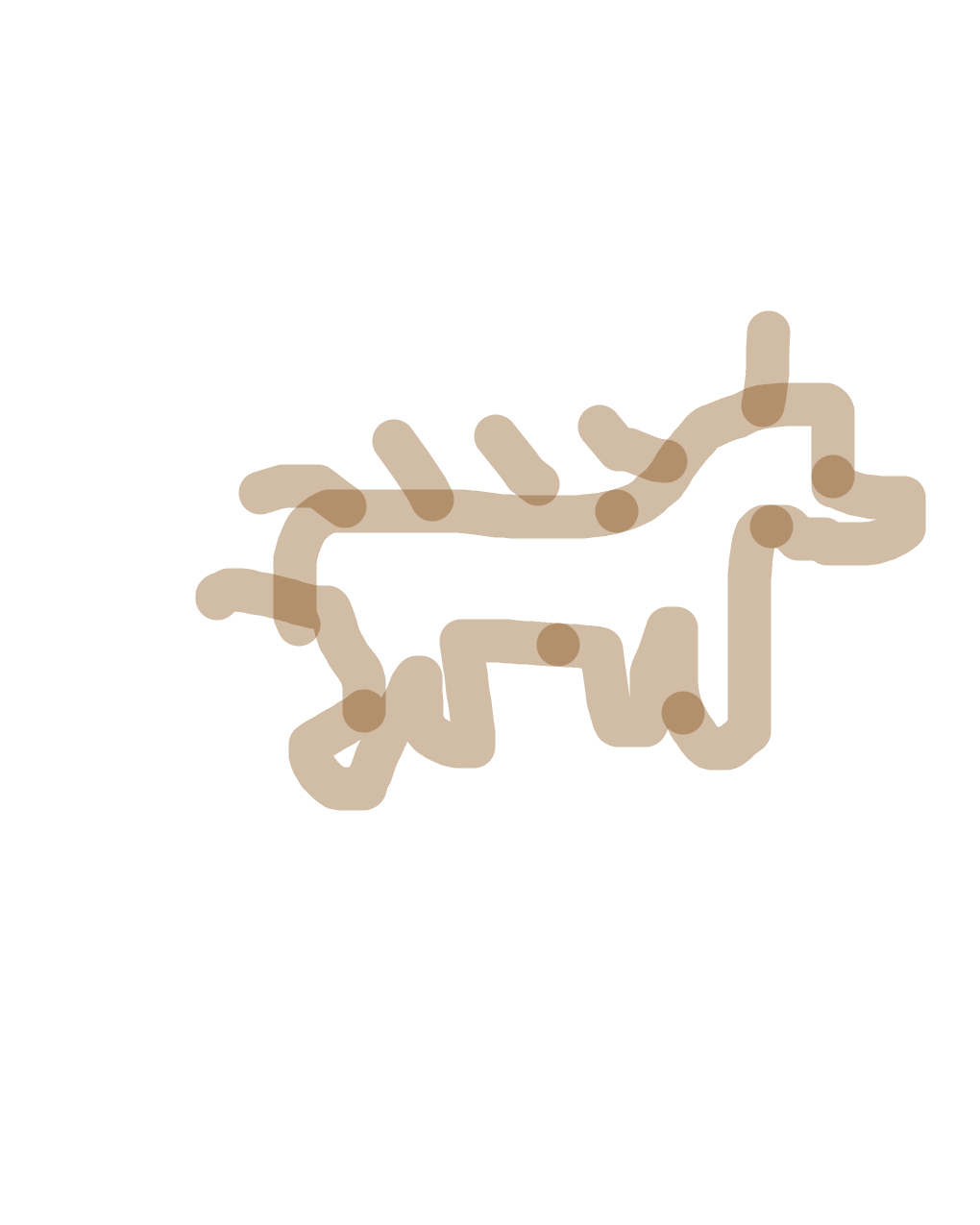
What Gilles Deleuze called the haptic - vision that touches rather than surveys from a distance - is precisely what Dania Osei-Frimpong activates here. The looping tan line does not simply outline an animal form; it moves across the picture plane as accumulated sensation, the eye pulled through each vertebral curve and splayed limb rather than allowed to settle at any stable perimeter. Where the strokes cross and overlap, darker nodes of concentrated pigment pool at the intersections, functioning less as joints than as intervals of pressure - brief arrests in an otherwise continuous flowing that the surrounding lighter passages immediately resume and carry forward.
- Curatorial note, wifärt gallery

White on White
Heyo
The page offers nothing - or rather, it offers the full weight of an unbroken white field, which is itself a formal condition worth attending to. No pressure has been applied, no boundary drawn, no hand moved across the surface at all. The absence is total and evenly distributed, the ground refusing to become figure by any means available to it.
- Curatorial note, wifärt gallery
Creature With Spined Back
Miriam Osei-Bonsu
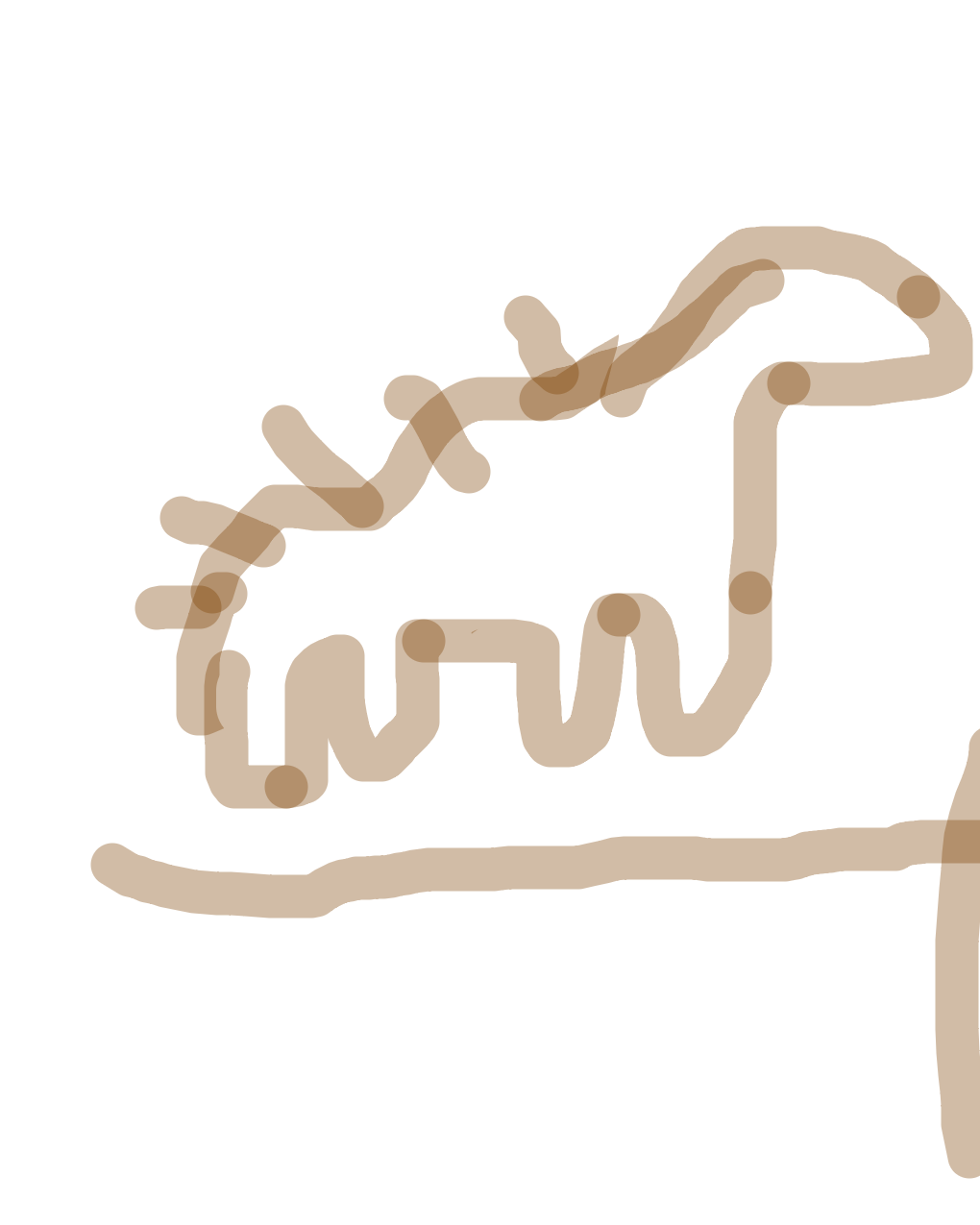
A warm tan line opens at the upper right with a broad, looping head shape - the pressure here is heavier, the curve more deliberate, suggesting this was the starting point from which everything else unfolded. The stroke drops into a long vertical leg, doubles back, and begins a leftward journey across the page in a series of repeating wave forms, each one slightly flattened at its base, as though the hand accelerated between peaks. From the upper ridge, short diagonal strokes branch upward at irregular intervals, thicker at their roots where the pen lingered before lifting. Two overlapping versions of the same figure occupy the same space, one drawn in a deeper, browner tone, the other in a cooler sand, producing a soft interference wherever the lines cross.
- Curatorial note, wifärt gallery
Long Dog Considers Itself
Leonie Addo
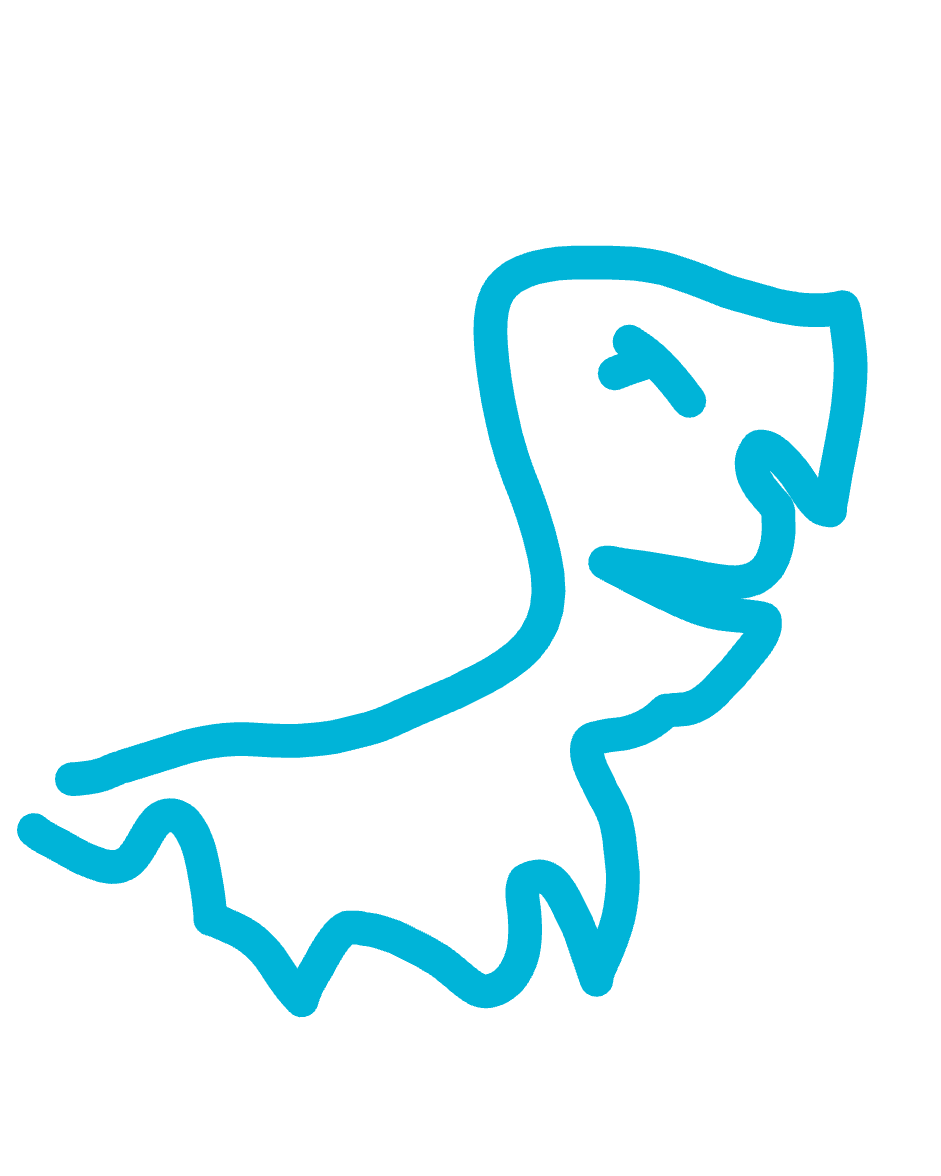
The cyan line here is doing at least three different things at once, and that multiplicity is the subject. A broad, squared head sits upper right, drawn with firm, even pressure along its top edge before the line softens and rounds toward the jaw. From there the body drops into a long sweeping corridor - the hand clearly moved fast across this stretch, the stroke thinning fractionally - before splaying into a low, wide base of undulating folds that slow the eye right down to a near-standstill. Two small interior marks, a dot and a short diagonal, hold the face open. The white within the outline is not empty: it reads as volume, pressed outward by the surrounding cyan weight.
- Curatorial note, wifärt gallery
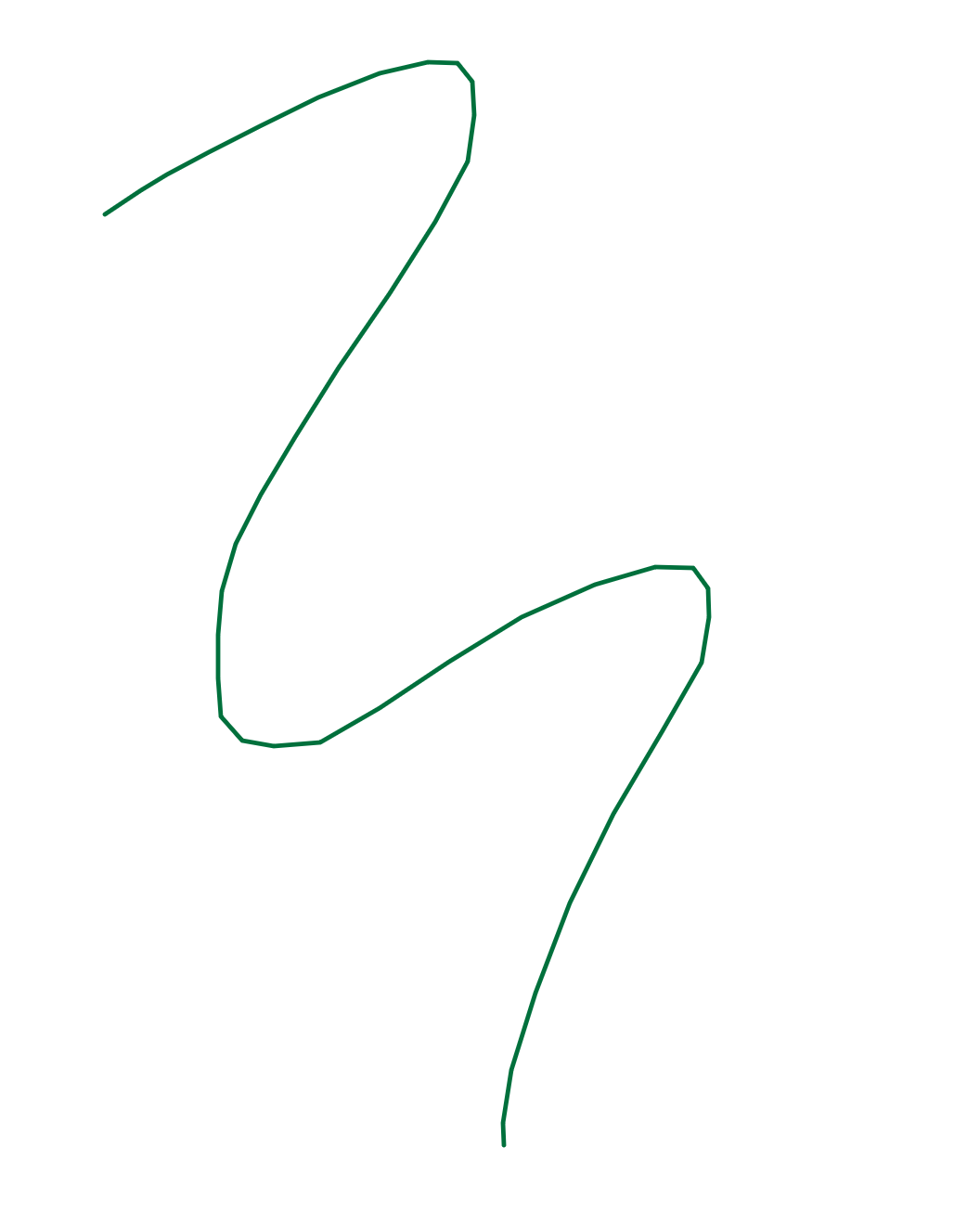
Two Loops Seeking Ground
Mikii
Two large elliptical forms occupy the page on a shared diagonal axis, the upper one sitting high and left, the lower drifting right and below it, as though the hand found a rhythm on the first loop and let that momentum carry the second into a slightly different register. The line throughout is a consistent, unhurried dark green - pressure neither light nor heavy, weight held steadily around each curve without any obvious point of hesitation or rush. What separates these two forms is not blank space but active space: the white between them is shaped by the arcs on either side and holds as much compositional charge as the marks themselves. The upper loop closes almost completely; the lower one opens at its base into a long falling tail that pulls the eye downward and off the page, leaving the work genuinely unresolved at its lower edge.
- Curatorial note, wifärt gallery
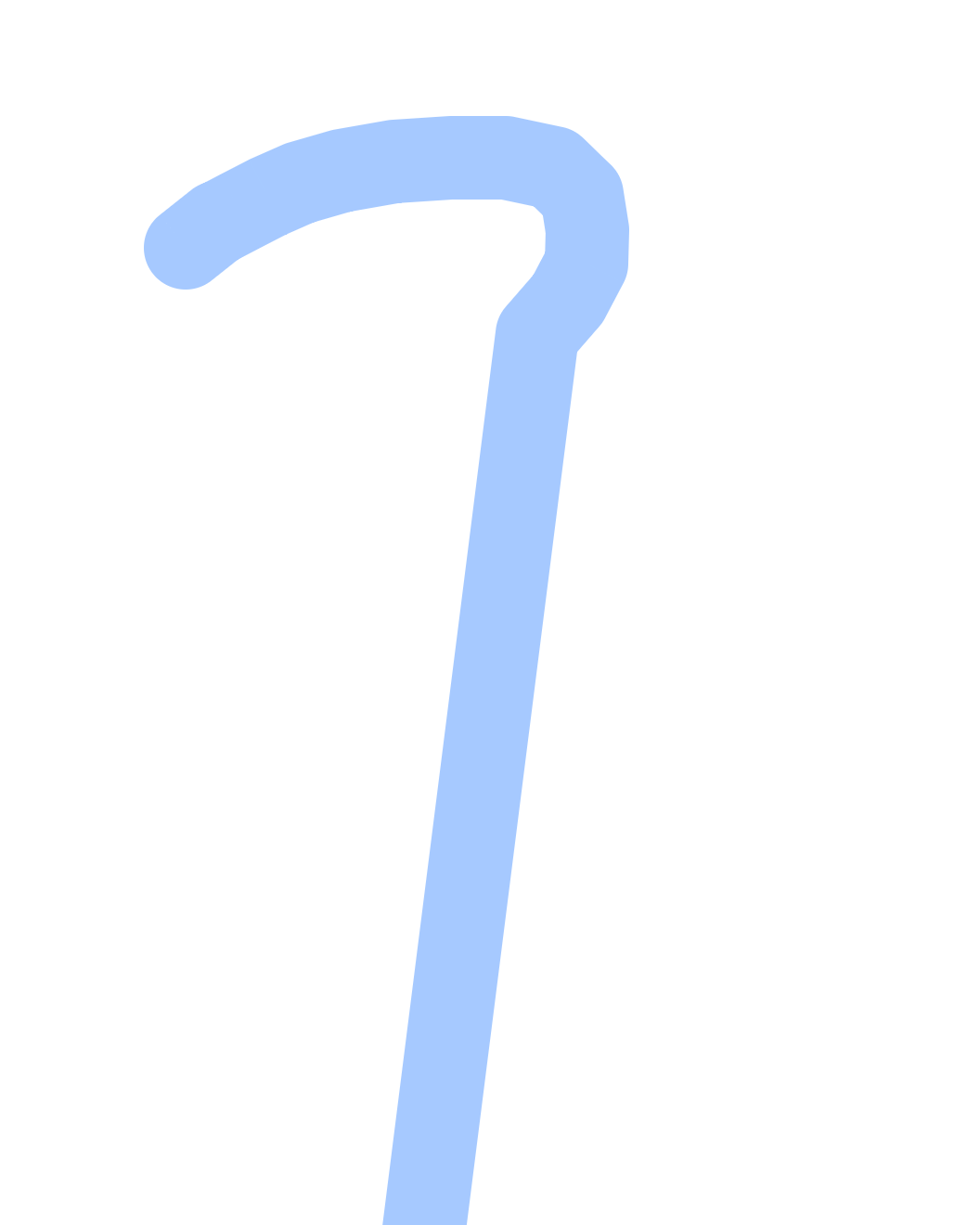
Blue Hook Falling Rightward
Mikii
A single pale blue stroke opens at the upper left with a broad, leftward-curving terminus - the hand seems to have started there, pressing with moderate weight before sweeping right across the full width of the picture plane. Where the arc peaks and turns downward, the line narrows briefly into a sharp interior corner, almost mechanical in its precision, before the stroke straightens and descends on a slight diagonal toward the lower edge, where it exits the page entirely without resolution. The colour throughout is a soft, washed blue - consistent in tone, neither deepening at the bends nor fading at the extremities, suggesting a fluid medium applied without hesitation.
- Curatorial note, wifärt gallery
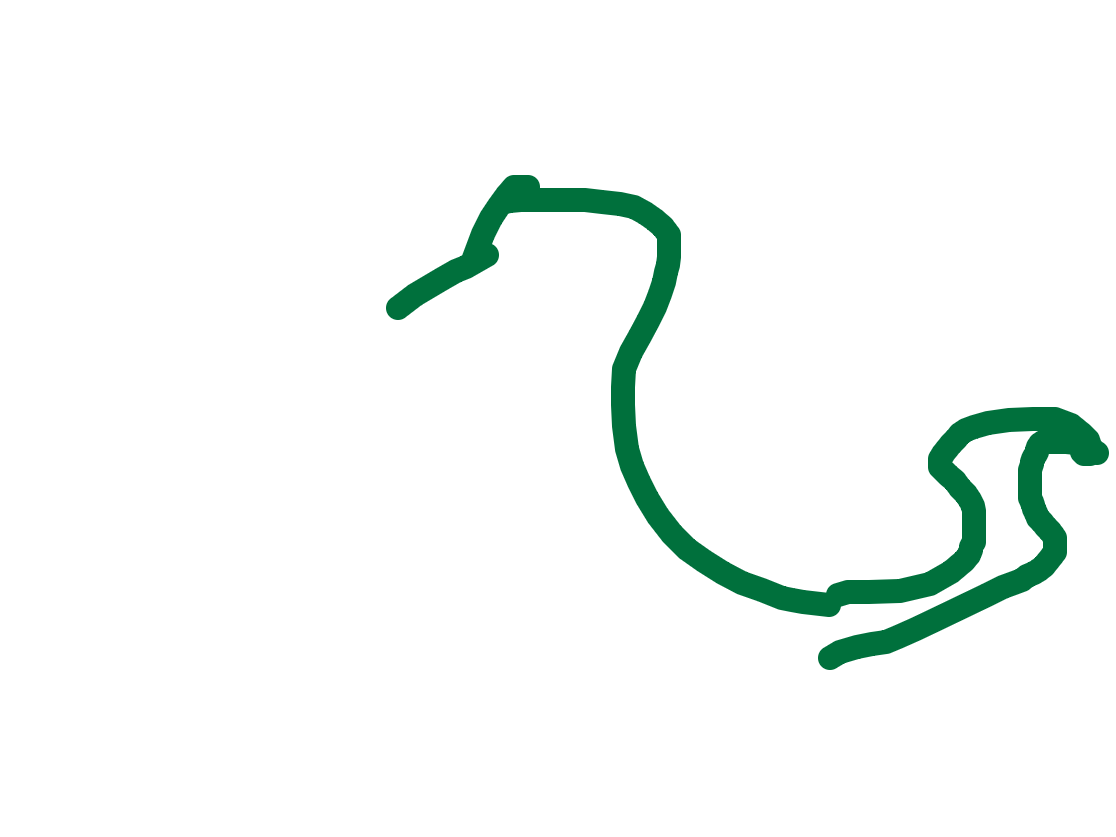
Duck Resting on Still Water
Rusto
Utagawa Hiroshige's successors in the rimpa tradition understood that a bird drawn from its outline inward carries more biological truth than one built up from anatomical study - the contour does the thinking, and the interior follows. Rusto's green outline works that same logic: a bill indicated by a short, blunt diagonal, the head rising into a thick sweeping crown, the body dropping and broadening through a long curved descent before flattening into a tail that fragments into two separate strokes suggesting a wing's trailing edge on water.
- Curatorial note, wifärt gallery