Exhibitions / Exhibition 07 · Current
Favourite Things
Everyone has one. Few can explain it. This exhibition asks for the object a person would rescue first - the mug, the bicycle, the dog, the coat - and records what remains of that attachment once it has been reduced to a line on a phone screen.
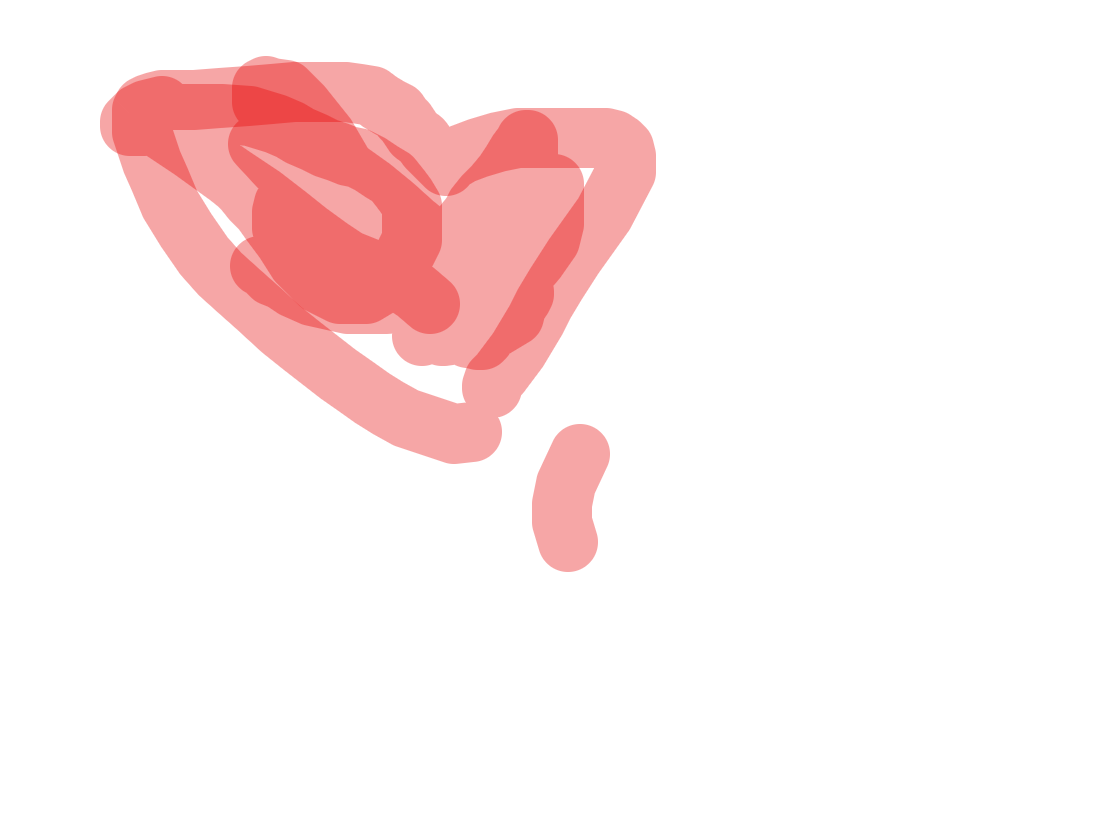
Tangled Rose Form, Comma
Yemi Coker
The connection that clarifies this work is Utagawa Hiroshige - not the landscape prints but his preparatory brush studies, in which a mass of overlapping strokes accumulates into something between notation and image before the hand withdraws. Coker's layered pink and red forms operate by the same logic: each pass through the upper cluster adds density without resolution, the whole held together by a single looping outer arc that also, quietly, fails to close.
- Curatorial note, wifärt gallery
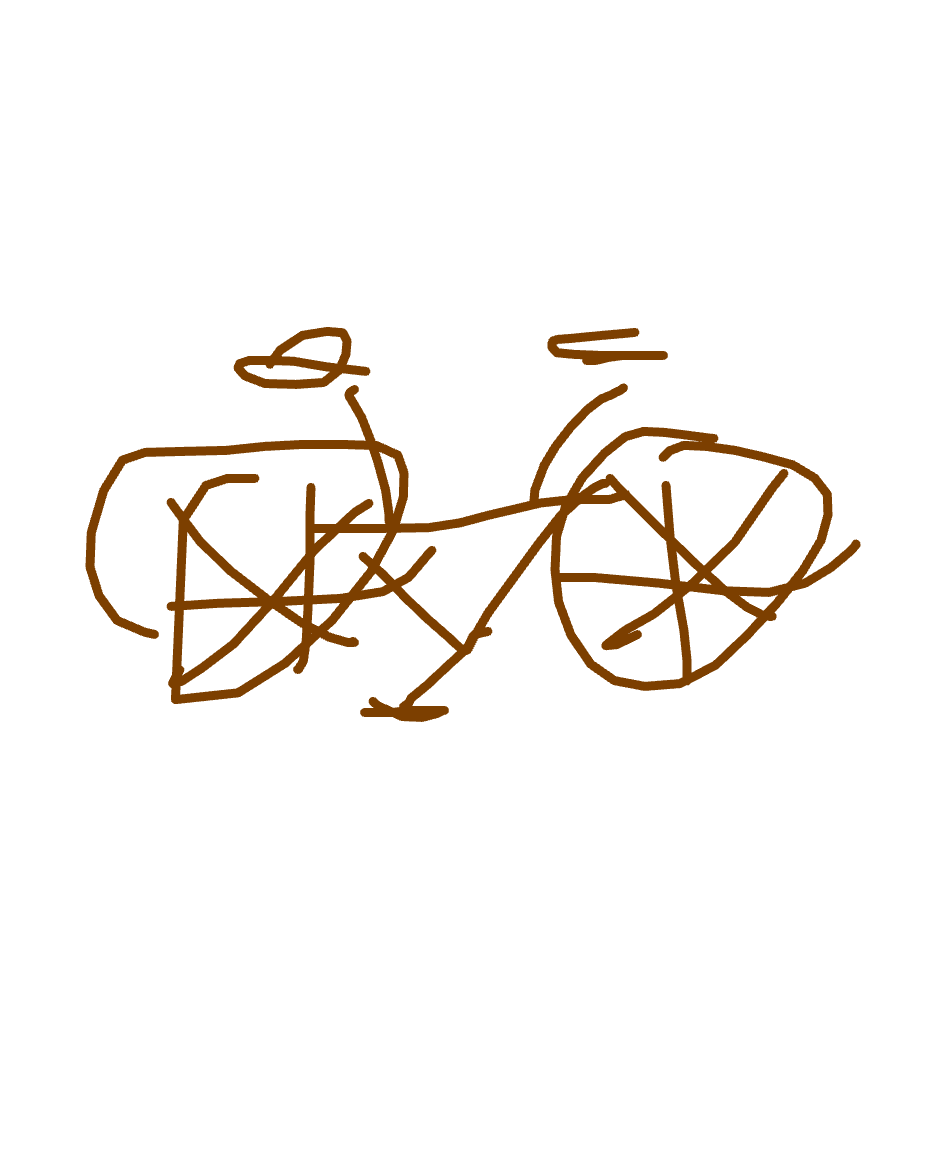
Bicycle With Spoked Wheels
Kevin Addo
A brown line of consistent weight opens at the left with two enclosures - a large rectangular body and, below it, a wheel whose interior is crossed by four or five chords converging near a central hub. The hand appears to have laid in that rear wheel first, then moved rightward to place a second, rounder wheel whose spokes radiate with slightly more confidence, the strokes pressing firmly before lifting. Above the frame of the machine a small saddle-shape sits on a vertical stem, and a horizontal handlebar floats at the upper right, slightly detached, as though the hand decided the connection was implied. The pedal and crank area, low and central, accumulates more marks than any other zone - lines crossing and recrossing until legibility tips into texture.
- Curatorial note, wifärt gallery
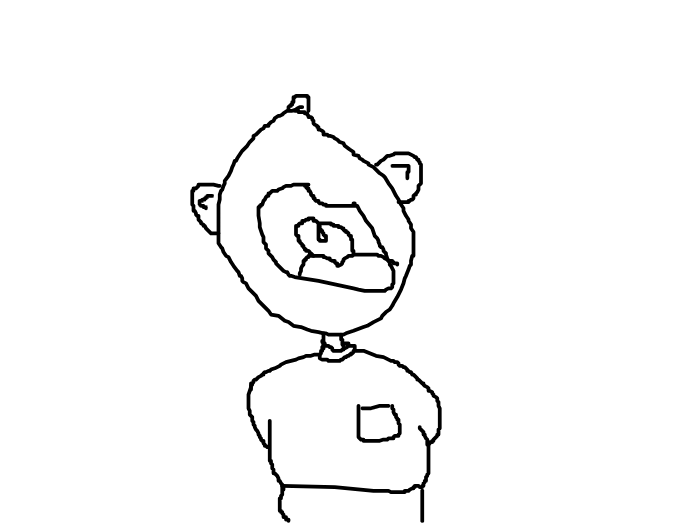
Bear Person Pocket Shirt
DeLaCroix
What Derrida's theory of the parergon insists upon is that the frame is never neutral - that the boundary separating work from surround is itself a productive site of meaning. DeLaCroix's nested concentric outlines enact this precisely: the outer cranial oval contains a second contour, which contains a third, each ring tightening inward toward a small facial deposit of strokes that refuses to stabilise into legible feature. The pocket on the shirt below operates as a secondary parergon - a frame within a frame, anchoring the bodily register with the same casual arbitrariness as the ears perched at either side of the head.
- Curatorial note, wifärt gallery
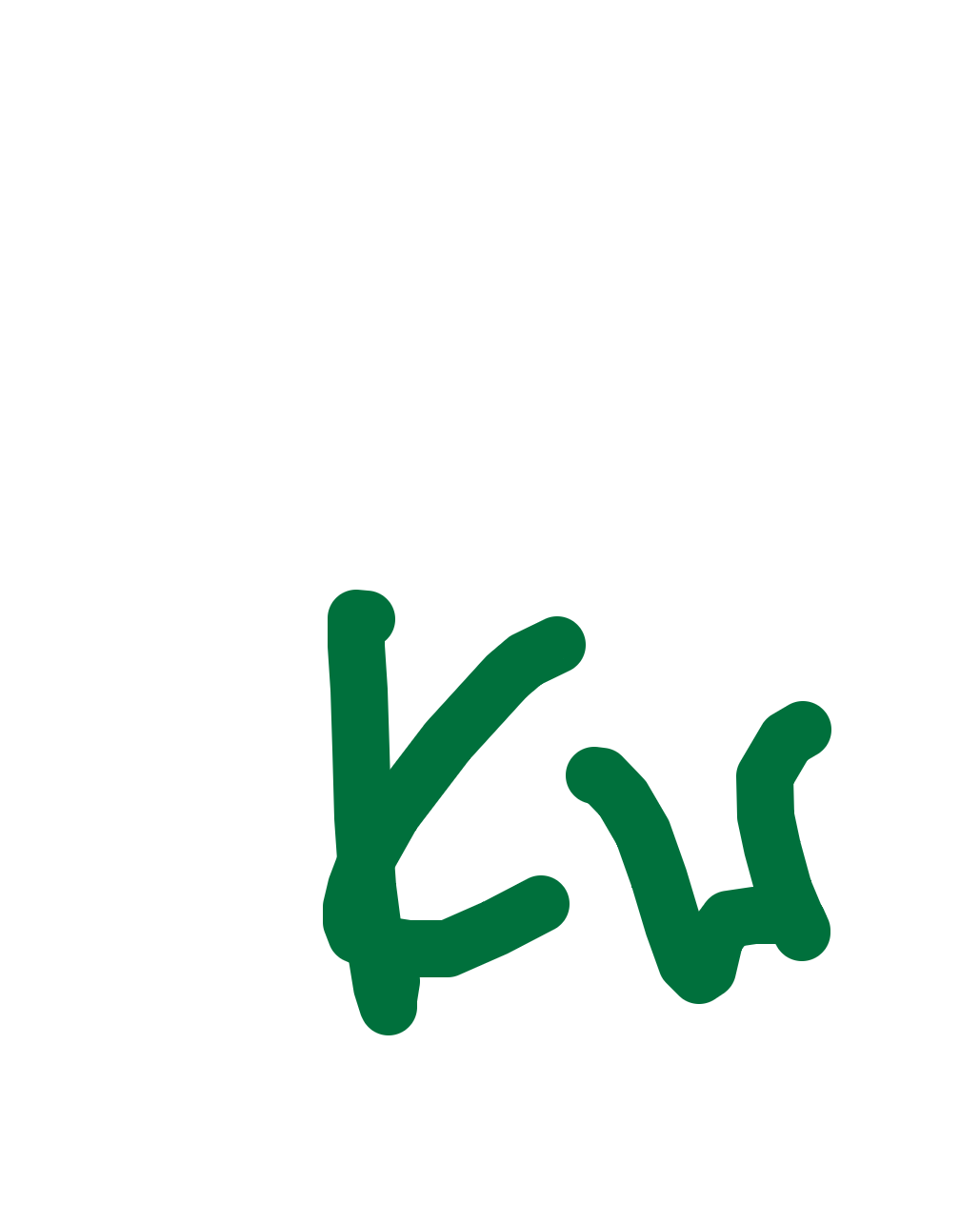
Two Forms, Leaning Left
Ravi Pillai
Three strokes account for the whole of this composition - a tall vertical with a small terminal loop at its apex, a diagonal that cuts downward and right before curling into a wide lower stroke, and a second curving column that rises independently on the right and bends at its crown into a short hooked return. The dark green holds its full weight across every inch of line, neither thickening nor thinning as the hand moved, which gives the work an unusual evenness of pressure throughout. What holds attention is the angle at which the central diagonal drops: it cuts across the implied uprightness of the flanking verticals and introduces a lean, a tipping quality, that the surrounding white space refuses to correct.
- Curatorial note, wifärt gallery
Three Red Marks, Suspended
Mustry
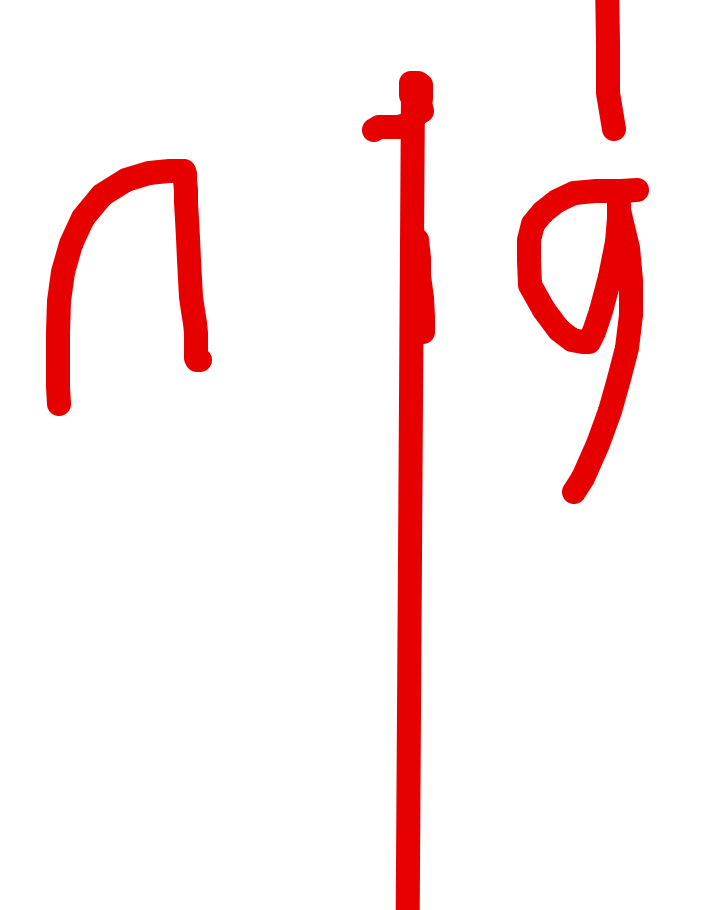
The comparison that arrives unbidden is Hilma af Klint - not the large Paintings for the Temple series but her smaller diagrammatic studies, in which looping red and black lines function as notation for forces the eye cannot otherwise see. Mustry's three forms share that quality of apparent incompleteness that is, on closer attention, structural: an open arch at the left, a vertical staff with a small hooked finial at centre, and a descending spiral tail at the right, each red line weighted with the same unhurried pressure throughout.
- Curatorial note, wifärt gallery
Untitled
Anonymous
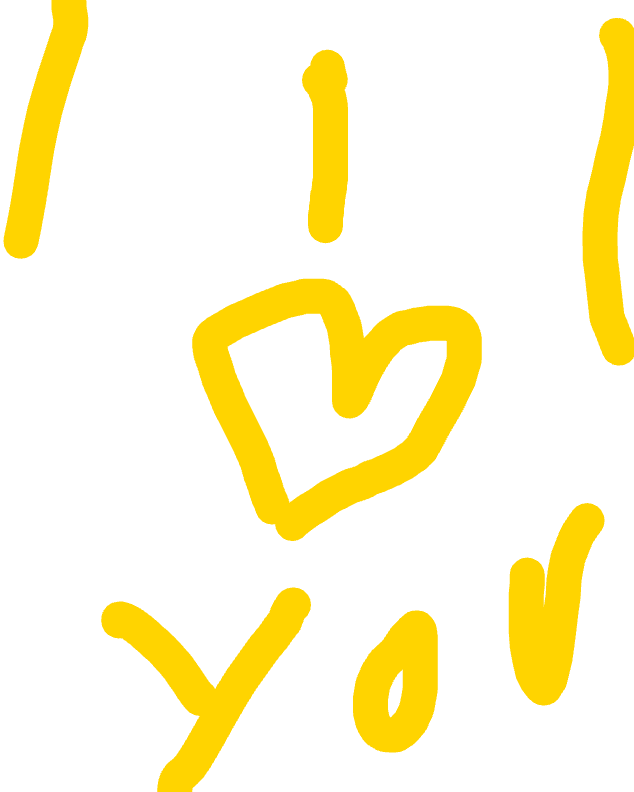
A curatorial note for this work is forthcoming.
- Curatorial note, wifärt gallery
Two Hands, One Letter
Hassan Oduya
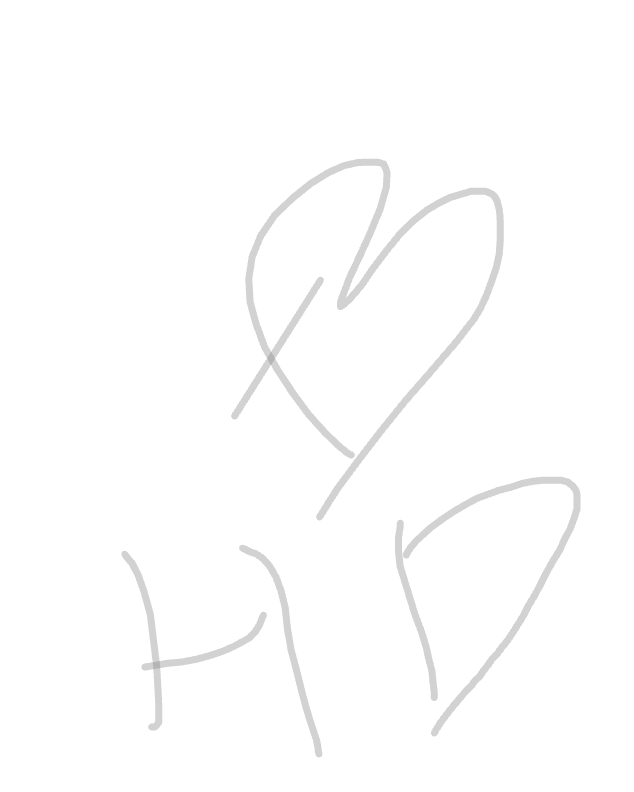
The pairing that clarifies this work is an unlikely one: Jean Dubuffet alongside ancient Chinese oracle-bone script. Dubuffet's art brut theory argued that the untrained hand preserves a truth the schooled hand destroys; the Shang-dynasty bone-carvers, working three millennia earlier, collapsed pictogram and phoneme into single strokes. Hassan Oduya's upper cluster - two overlapping looped enclosures whose shared boundary is a crossing diagonal - sits precisely at this junction, neither legible word nor pure form.
- Curatorial note, wifärt gallery
Looped Forms, Crossing Lines
Selin Kaya
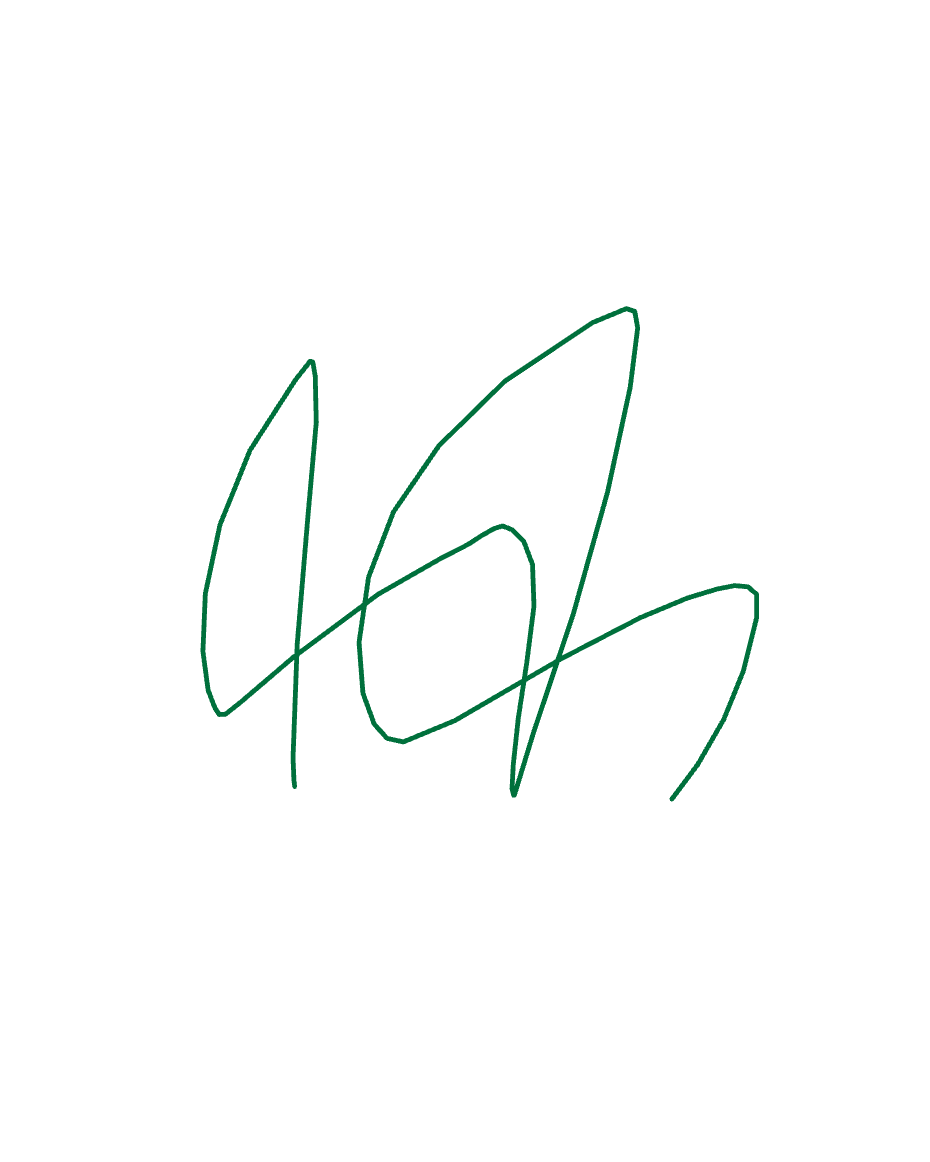
Two tall vertical enclosures anchor the left half of the field - the leftmost a slender pointed leaf-shape, the second wider and more rounded, its base sweeping into a rectangular loop that sits at the centre. From that loop, the line travels rightward and upward in a broad diagonal arc, filling the upper right with a second large pointed form whose crown reaches higher than anything to its left. The dark green line holds a consistent, deliberate weight throughout, neither thinning at curves nor thickening under apparent pressure, which gives the whole surface an evenness that sits in quiet opposition to the overlapping and crossing the composition performs. Where lines intersect they do so cleanly, without smearing, suggesting careful sequencing rather than speed.
- Curatorial note, wifärt gallery
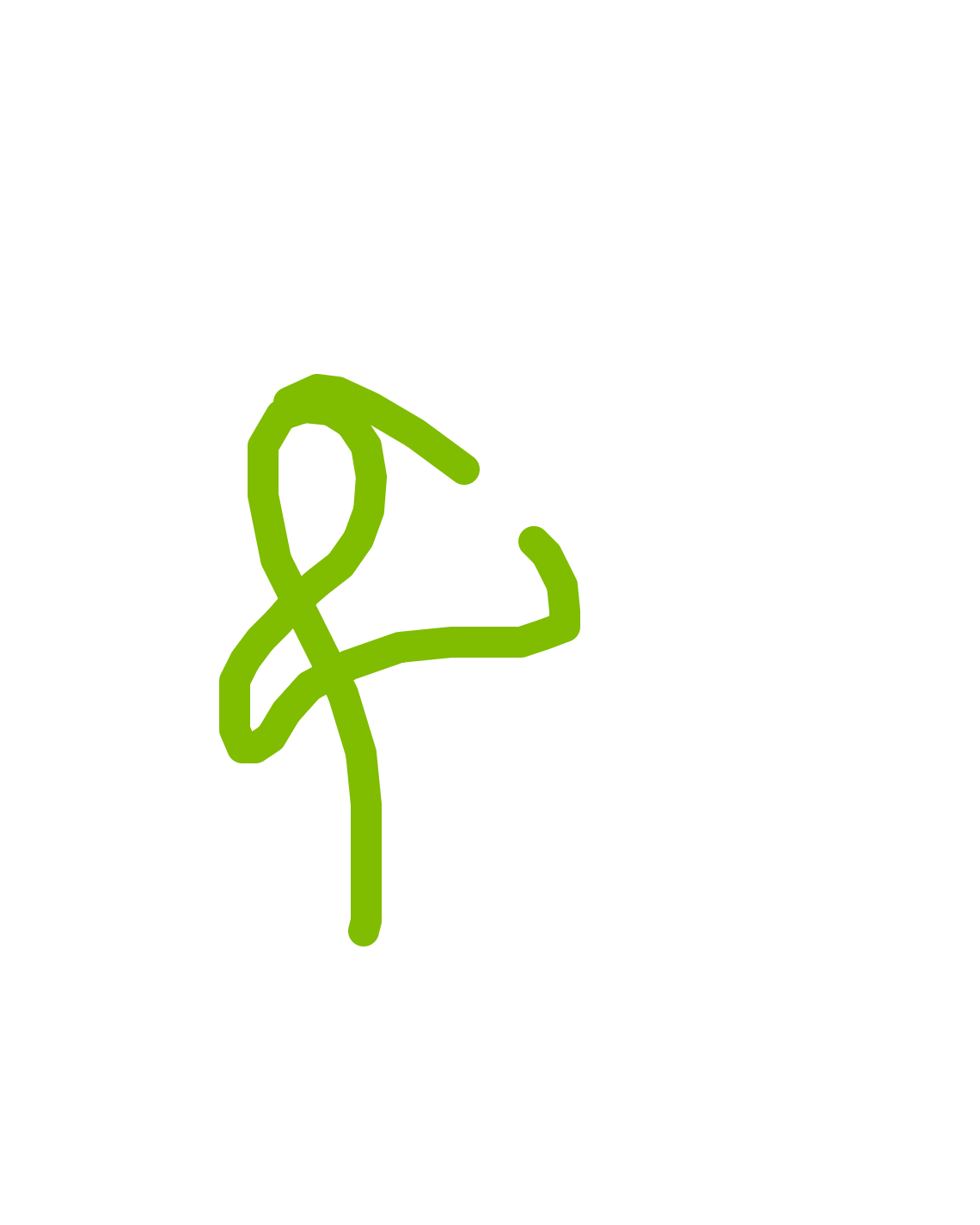
Loop With Descending Stem
Lekan Adisa
A closed oval sits at the upper left, its lime green line thick and unwavering, pressing into the page with a pressure that the rest of the composition does not quite match. From that oval, the line crosses itself - a deliberate self-interruption that produces a pinched, knotted centre, the weight of the stroke compressing visibly at the crossing point. Two further loops splay outward beneath it, one folding left, one curling right, before the whole form collects itself into a single vertical stroke that drops straight down through the lower third of the field. That descent is the quietest passage: the line thins only marginally, the hand seemingly slowing as it commits to the column. To the right, a separate arc - smaller, lighter, opening like a hook - hangs in partial isolation, answering the upper oval without completing any enclosure.
- Curatorial note, wifärt gallery